Even the most basic aspects of everyday life, such as walking, sitting, or climbing stairs, may cause knee pain. In most individuals, this discomfort is commonly associated with conditions such as osteoarthritis or rheumatoid arthritis.
Although both conditions impact the knee joint, they differ significantly in their causes, symptoms, and the manner in which they develop over time. Knowing the distinction between osteoarthritis and rheumatoid arthritis in the knee can help you better understand your body and take the right steps toward treatment.
The encouraging reality is that both conditions can be effectively managed with timely intervention and the right clinical guidance, and you can be active and comfortable.
Both osteoarthritis and rheumatoid arthritis affect the knee joint, but they differ in their cause, pattern, and symptoms. Understanding these differences can help you recognize early signs and seek the right care.
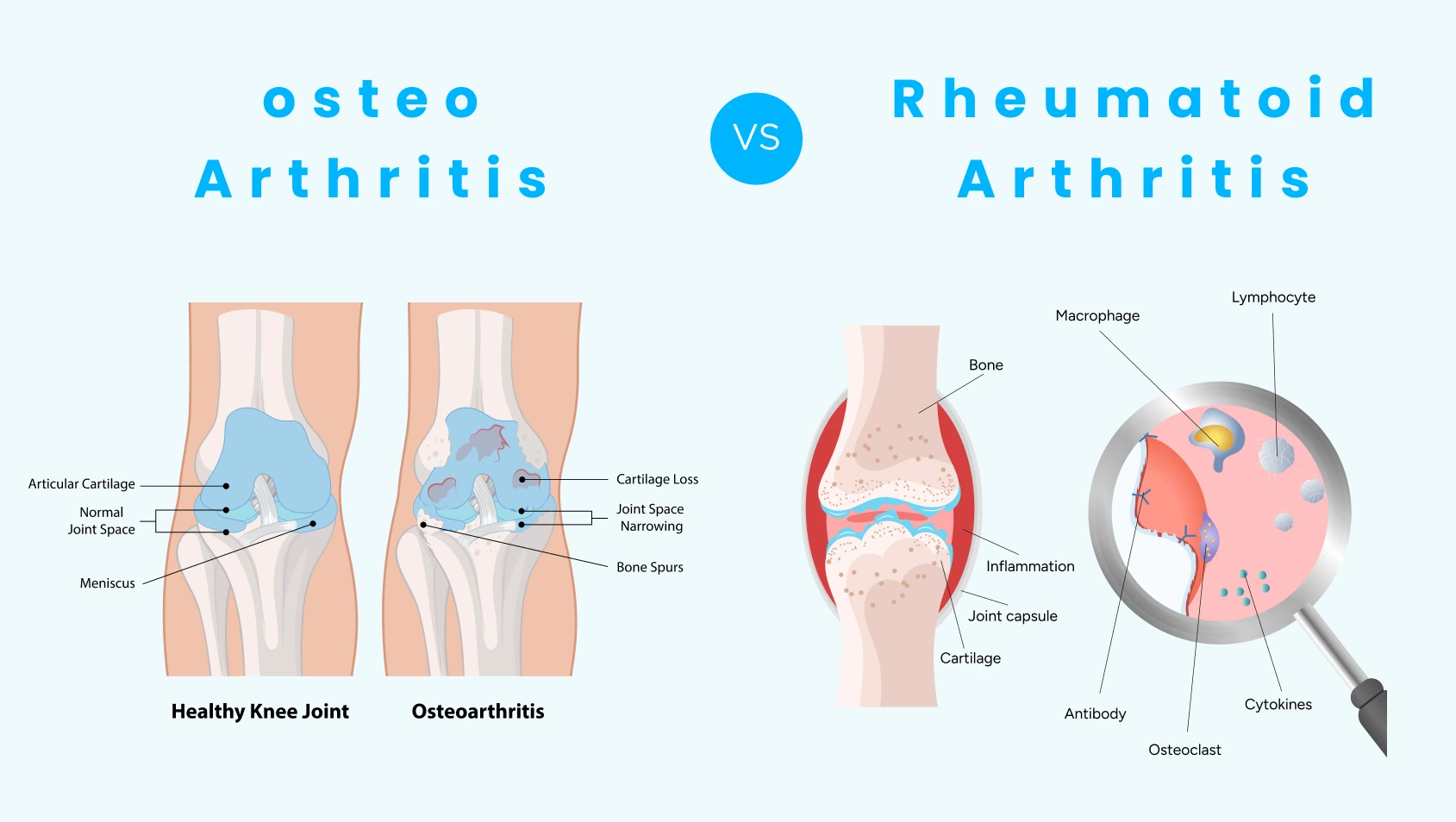
Osteoarthritis is one of the most common joint disorders, especially with increasing age. It arises when the smooth cartilage that provides cushioning to the knee joint becomes thinner with time.
Osteoarthritis (OA) is becoming a major health issue in India. The number of people affected has risen sharply, from about 23.46 million in 1990 to around 62.35 million in 2019, according to data published in PubMed Central. The joint may become stiff or painful due to the reduced smooth movement between the bones during joint motion.
With the right lifestyle changes and medical guidance, many people with osteoarthritis are able to stay active and maintain a good quality of life. Seeking care from experienced specialists at a trusted orthopaedic hospital in Chennai can also make a significant difference in managing symptoms effectively.
Osteoarthritis is not the same as rheumatoid arthritis. It is an autoimmune disease in which the body’s immune system mistakenly attacks the lining of the joints.
According to Springer Nature, approximately 0.7% of the population in India is affected by rheumatoid arthritis (RA), which is higher than the global average of 0.46%. Many people with RA live with long-term symptoms that limit their physical activity and have a noticeable impact on their overall quality of life. This leads to inflammation to the knee joint and often affects multiple joints simultaneously.
With early diagnosis and consistent care, many people are able to manage rheumatoid arthritis effectively and continue living a fulfilling life. Access to holistic rehabilitation support through comprehensive therapy services in Chennai can further improve mobility and overall well-being.
It is natural to be confused when the symptoms are similar. Both rheumatoid arthritis and osteoarthritis may produce knee discomfort, but some patterns can help distinguish between them.
Here’s a simple comparison:
|
Feature |
Osteoarthritis (OA) | Rheumatoid Arthritis (RA) |
|
Cause |
Wear-and-tear, ageing, injury |
Autoimmune condition |
|
Age of Onset |
Usually 50+ |
Often 30–60, can be younger |
|
Pattern |
One or both knees (asymmetrical) |
Both knees (symmetrical) |
| Morning Stiffness |
Less than 30 minutes |
More than 30 minutes |
If you notice persistent symptoms, it’s always helpful to consult the right knee specialist in Chennai for clarity.
The symptoms of osteoarthritis tend to build up over time and may fluctuate over time.
Common symptoms include:
Symptoms usually resolve with rest and can be treated using simple lifestyle changes and medications.
Symptoms of rheumatoid arthritis can be more prominent and have an impact on overall well-being.
Common symptoms include:
Since rheumatoid arthritis can affect multiple joints, starting treatment early can help make the symptoms easier to manage. Having access to a reliable online pharmacy in Chennai for timely medications can also support better symptom control and consistent care.
Knowing what is causing your knee condition can make it easier to manage and do the right things for care.
Although the causes vary, both conditions can be successfully treated at the initial stage with the appropriate care plan.
When the condition is diagnosed, the focus is on improving comfort, movement, and joint health.
The treatment is never general, and most individuals remain active with the right guidance.
Yes, there are cases when an individual might have both osteoarthritis and rheumatoid arthritis. This may occur when joint alterations with age are combined with an autoimmune disease.
This might sound complicated, but it can be handled with the proper care plan.
Doctors focus on:
Through guidance, people are able to go on with their daily tasks easily and confidently.
Knowing the distinction between osteoarthritis and rheumatoid arthritis in the knee is a significant move towards improved joint management.
Although osteoarthritis is associated with wear and tear, rheumatoid arthritis is associated with the body’s immune response. The two conditions can be similar in some instances, but the way they are handled differs.
The good news is that both conditions can be managed successfully with early consultation, easy lifestyle changes, and the appropriate medical help.
In case you experience persistent knee pain, stiffness, or swelling, consulting a specialist can help you move forward with clarity and comfort. Get your personalized treatment now by getting in touch with our expert doctors.
FAQ’s
1. What is the key difference between osteoarthritis and rheumatoid arthritis in the knee?
Osteoarthritis is caused by the gradual wear and tear of the joint over time, whereas rheumatoid arthritis is an autoimmune condition where the body’s immune system attacks the joint lining.
2. Which condition causes more severe morning stiffness?
Rheumatoid arthritis typically prolonged morning stiffness lasting more than 30 minutes, while Osteoarthritis stiffness is usually shorter and improves with movement.
3. Can knee arthritis be managed with lifestyle changes alone?
Yes. Lifestyle changes such as regular exercise, weight management, and joint care play a key role, but many patients may also require medical treatment for optimal symptom control.
4. Is knee arthritis only seen in older adults?
Osteoarthritis is more common with ageing, but rheumatoid arthritis can develop earlier, often between 30 and 60 years of age.
5. When should I consult a doctor for knee pain?
If knee pain, swelling, or stiffness persists for more than a few weeks, worsens over time, or begins to interfere with daily activities, it is advisable to seek medical evaluation.
6. Can both knees be affected at the same time?
Yes. Rheumatoid arthritis often affects both knees symmetrically, while osteoarthritis may affect one or both knees, sometimes unevenly.
Rheumatoid arthritis can be more complex as it is a systemic autoimmune condition that may affect multiple joints and overall health, requiring long-term medical management.
No. Osteoarthritis and rheumatoid arthritis are different conditions with distinct causes. However, a person can have both conditions at the same time.
Doctors may recommend blood tests, X-rays, or MRI scans to differentiate between osteoarthritis and rheumatoid arthritis and assess joint damage.
Yes. Early diagnosis and timely treatment can significantly reduce symptoms, slow disease progression, and help maintain joint function.