The bones and joints play a key role in aiding movement, posture, and day-to-day activities. When the body carries excess weight, the load on these structures increases. Over time, this can influence flexibility, comfort, and mobility. Understanding this relationship can help prevent early complications and support long-term wellness.
In India, obesity has become a leading contributor to bone and joint problems.. Research shows that overweight individuals are up to five times more likely to develop knee osteoarthritis,a trend increasingly seen in younger age groups.
Excess weight can affect different parts of the skeletal system. Below are common ways obesity influences bone and joint function, explained simply.
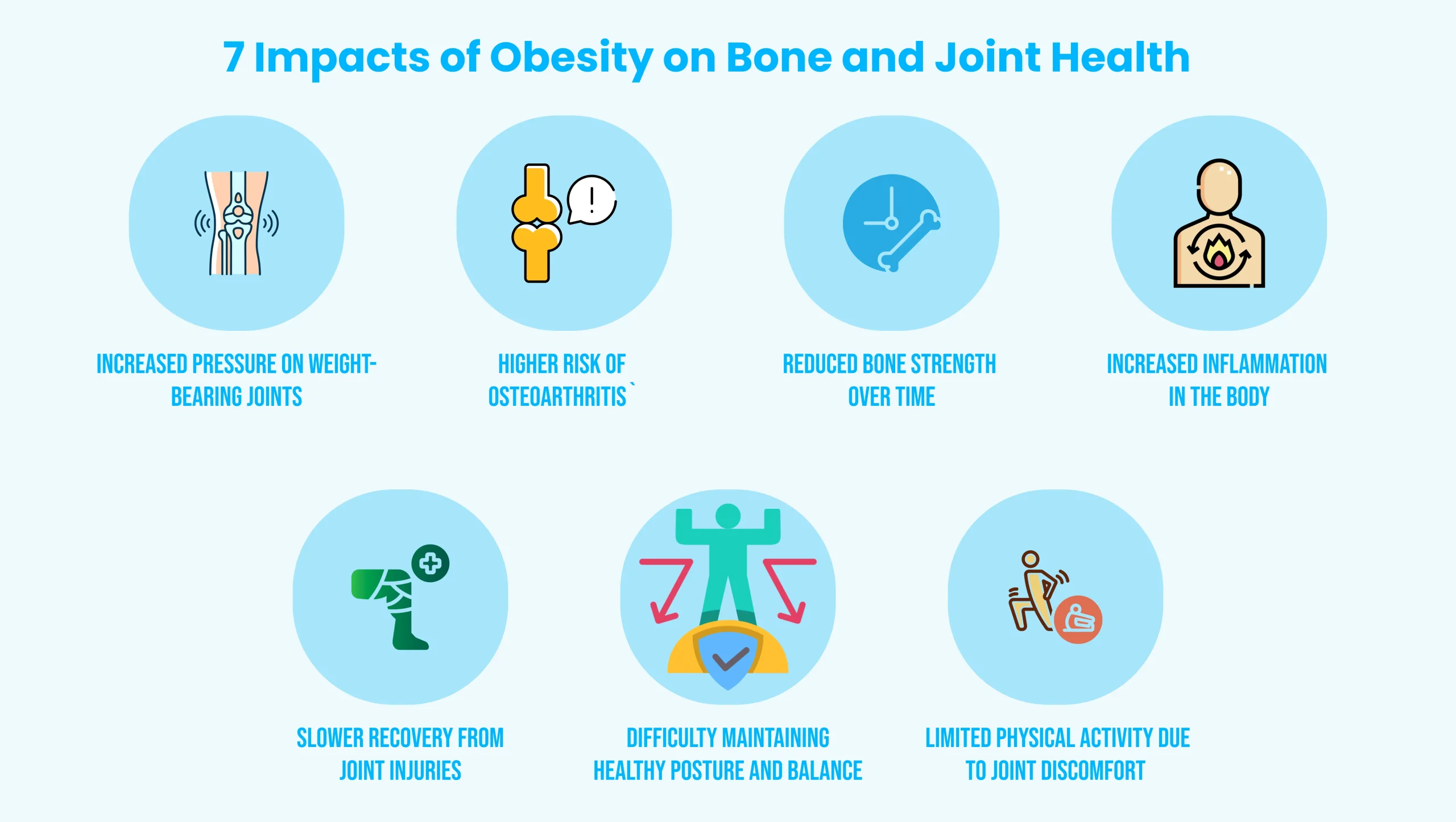
The knees, hips, and ankle support the body while standing and walking. When body weight increases, these joints face greater strain. This added pressure may cause pain and early wear of the joints.
Fat tissue can release chemicals that affect joint cartilage. Combined with mechanical stress, this can speed up cartilage breakdown, causing stiffness or pain during movement.
While physical activity strengthens bones, excess body fat does not. Higher fat levels may alter vitamin D metabolism and reduce bone density, potentially weakening bones over time.
Obesity may trigger low-grade chronic inflammation. This inflammation can impact joint tissues, leading to tenderness, reduced mobility, and slower healing after minor injuries.
Extra stress and inflammation can delay recovery from sprains, ligament injuries, or fractures. Such cases may require closer guidance from the best orthopedic doctors in Chennai.
Excess abdominal weight can shift the body’s center of gravity, affecting posture. This may lead to rounded shoulders, lower-back strain, and balance issues. Persistent posture concerns may require consultation with an orthopedic surgeon.
Joint pain may discourage movement, resulting in reduced activity. Over time, this weakens supporting muscles and makes mobility more difficult. However, regular light exercise can help protect joints.
Extra weight can strain the spine, especially the lower back. Over time, this may affect spinal alignment and posture, and in some cases contribute to disc strain or nerve compression..
Nearly 6 out of 10 people in India experience significant back pain at some point in their lives. Maintaining spinal health is essential for mobility and comfort. If persistent back pain disrupts daily routine, it may be helpful to consult a specialist.
For urgent symptoms, 24/7 care support can offer timely guidance.
You may consider meeting a doctor if:
Early evaluation helps determine the right approach for comfort and mobility. For personalised guidance, you may consult a joint pain specialist in Chetpet.
Obesity can influence bone and joint health in multiple ways, but small and consistent lifestyle adjustments can reduce strain and support long-term mobility. A balanced approach that includes movement, mindful eating, and expert guidance is highly beneficial.
If you are experiencing discomfort or mobility issues, orthopedic specialists at Dr. Mehta’s Hospitals can help create a personalized care plan. Contact us to book an appointment with our experts.