Sometimes, pain around the joints or muscles can be caused by a sudden twist while walking, a stumble during daily activities, or lifting something incorrectly. During such times, the terms sprain and strain are often used interchangeably. Although they may seem similar, they affect different body parts and require slightly different care.
Knowing the difference between a sprain and a strain can help you stay calm, manage pain more confidently, and recognise when medical care may be needed. Most people recover fully and return to normal activities with the right awareness and care.
The primary difference between a sprain and a strain lies in the type of tissue affected.
They both can occur in daily activity or physical exercise, and both tend to recover with suitable rest and treatment. Knowing which condition you are dealing with can support a smoother and more effective recovery.
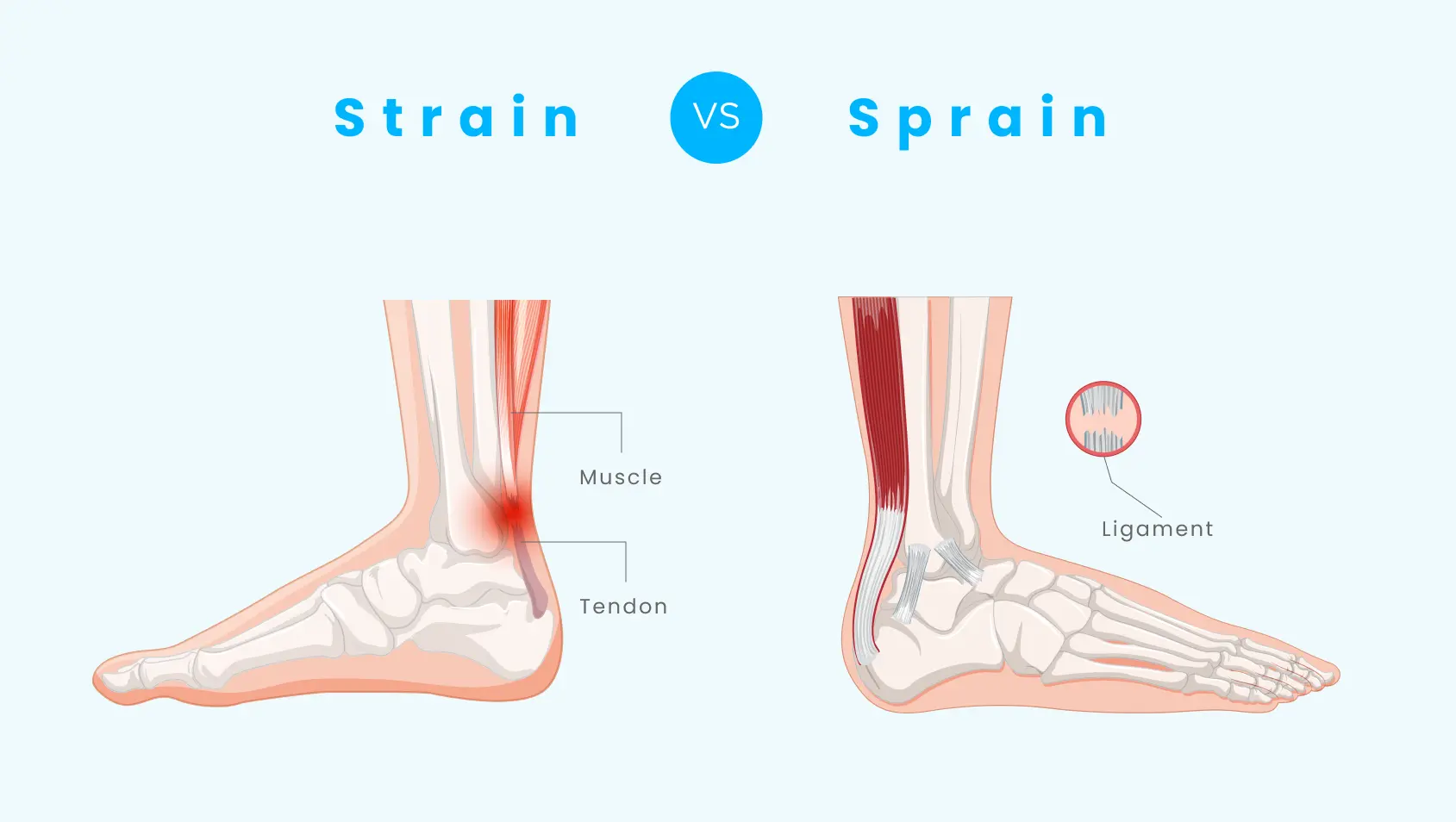
| Symptoms | Sprain | Strain |
| Affected tissue | Ligaments (connect bones) | Muscles or tendons |
| Common locations | Ankle, wrist, knee | Back, thigh, shoulder |
| Swelling | Common | May be mild or moderate |
| Bruising | Often present | Sometimes present |
| Movement difficulty | Around a joint | During muscle use |
| Tenderness | Around the joint | In the affected muscle |
| Stiffness | Joint stiffness | Muscle tightness |
This table offers a general comparison. Individual experiences may vary depending on the activity and body response.
A sprain typically occurs when a joint is overstretched. This may occur as a result of an abrupt motion or loss of balance. Sprains are common in India, particularly among individuals involved in sports and physical activities. Observational studies among physically active young adults in India suggest that sprains are fairly common; nearly one-third experienced sprains.
Some of the most common causes of a sprain are:
Common symptoms may include:
The majority of sprains can be treated with mere care, more so when timely. Seeking early advice from an experienced and one of the top orthopaedic hospitals in Chennai can help assess the injury accurately and guide the right recovery approach.
A strain occurs when a muscle or tendon is overstretched or overused. This is usually associated with repetitive movements or sudden activity.
The common causes of a strain include:
Common symptoms may include:
Rest and gradual return to movement are usually effective for the strains. If symptoms persist or recovery feels slow, medical evaluation may be recommended.
Strains and sprains are, in most cases, treated successfully with care and time. Nevertheless, recovery can be delayed when pain is neglected or exercise is restarted too soon.
Recurrent injuries in the same region may, in some cases, cause persistent stiffness or weakness. This is one of the reasons why it is essential to listen to your body and give it time to heal. An orthopaedic expert might be able to provide guidance and assist in making sure that the recovery remains on the right path, particularly when the symptoms do not vanish after a few weeks.
A significant number, up to 70%, of individuals who experience ankle sprains may continue to face ongoing issues. These can include lasting weakness, repeated sprains, or chronic ankle instability (CAI), which can affect daily activities and confidence while walking or playing sports.
Many individuals benefit from structured follow-up focused on joint and muscle health as part of comprehensive orthopaedic care.
Early care is significant in recovery. A commonly recommended early-care approach includes:
Light movement can be introduced at a slow pace as the comfort level increases. Medical advice should always be followed in pain relief measures.
These steps provide consistent relief for most people when followed properly.
Although most sprains and strains can be treated at home, medical advice may be required in case:
An assessment will eliminate other issues and make the healing process evolve without obstacles. Orthopaedic evaluations usually involve routine physical examinations and, in cases of necessity, radiographs to inform treatment choices.
Sprains and strains are common and tend to be easily treated. As deceptive as they might be, understanding the difference helps ensure the right care and faster recovery. With timely diagnosis, proper treatment, rest, and patience, most individuals heal completely and return to their normal activities comfortably. At Dr. Mehta’s Hospital, expert orthopedic specialists provide comprehensive evaluation and personalized care to guide patients through a safe and effective recovery journey.
Early warning signs, avoiding strains during rest, and consulting a doctor in case of uncertainty are easy measures that can sustain the joints and muscles’ health in the long run. Reaching out to the medical team at Dr. Mehta’s Hospitals can provide clarity, reassurance, and guided care.
Sprains usually involve joint swelling, while strains are felt more in the muscle. A medical evaluation helps confirm the diagnosis.
Short-term rest helps, followed by gradual movement as comfort allows.
Light activities are often fine if they do not increase discomfort. Listen to your body.
Many people improve within a few weeks, though recovery time varies by individual and injury type.
Yes, guided exercises can support strength, flexibility, and confident movement during recovery.