Sleep plays a major role in how our body feels the next day, especially when it comes to back and hip comfort. Most individuals are not aware that their sleeping posture can be the issue causing them to wake up with stiffness or discomfort. Sleep position influences the alignment of the spine, muscle relaxation and joint pressure.
Modifying your sleeping position by making minor adjustments can assist in making you comfortable, mobile, and well supported in your spine. This blog discusses the most suitable sleeping positions for lower back and hip pain and highlights postures that help reduce unnecessary strain on the body.
The natural curve of your spine requires support when sleeping. When spinal alignment is disturbed during sleep, excess pressure can build up around the lower back, hips, and surrounding muscles.
Lower back pain is highly prevalent in India. Studies show that nearly two out of three people experience it at some point in their lives, and about half of the population deals with it every year.
Over time, this can lead to stiffness or pain on waking up. Finding the appropriate back pain sleeping position assists in the even distribution of weight in the body and in the relaxation of muscles and joints by the time of sleep.
Sleeping positions that are generally recommended by experts include the following positions because they assist in keeping the spine straight and relieving the lower back and hips of pressure. The ideal sleeping position for lower back pain depends on individual comfort, flexibility, and personal needs.
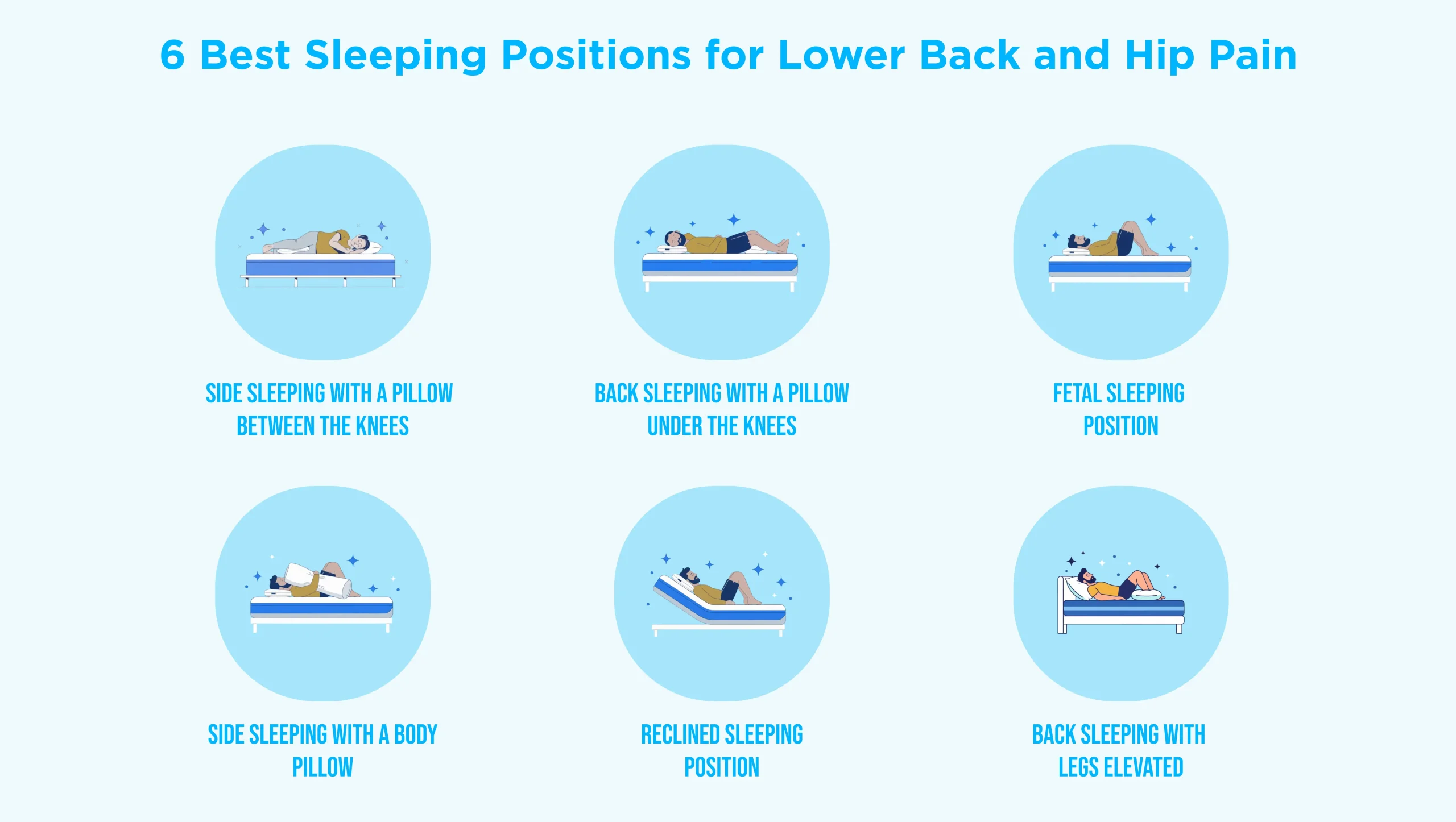
This is regarded as one of the best sleeping positions for lower back pain. Lying on your side with a pillow between the knees ensures that the hips are in line and the upper leg does not draw the spine out of place. It also minimizes lower back and pelvis strain.
This is a good sleeping position to lower back pain and is often advised for people who feel stiff in the morning. Many patients with persistent discomfort find long-term relief by combining proper sleep posture with expert orthopedics cares.
In India, most people prefer to sleep on their side, with around 62% choosing this position. Sleeping on the back is the next most common habit and makes up about one-third of the total time people spend sleeping.
Lying on your back enables your spine to rest in a neutral position. Putting a pillow under the knees can be used to keep the natural curve of the lower back and lessen the pressure on the lumbar area. This has been recommended as the right position to sleep for back pain, particularly among individuals experiencing middle or lower back pain.
It also supports evenly distributed body weight, thus being an accommodating sleeping position in relation to back pain.
The fetal position is one where you lie on your side, and the knees are pulled towards the chest. When done correctly, this position may help reduce tension in the spine and hips. It is important to keep the body in a relaxed position as opposed to being tightly curled.
This sleep position can be appropriate to individuals with lower back pain and tightness in hips. It is also believed to be a comfortable position to sleep in regarding the lower back pain when a pillow is used. If pain becomes sudden, severe, or difficult to manage at home, timely medical support can make a significant difference.
A full-length body pillow may provide additional support to the spine, hips, and shoulders. The position supports the upper leg, avoids twisting and remains in place during the night.
When individuals have the tendency of switching positions during sleep, a body pillow may assist in sustaining one of the good sleeping positions for lower back pain on a regular basis.
A slightly bent posture like resting on a bed with an adjustable bed or recliner can ease pressure on the lower back and hips. This position helps maintain spinal alignment while reducing stress on the joints.
It can also be useful to those who cannot stay in a flat position and are experimenting with other sleeping positions to relieve lower back pain. And for individuals looking to rule out any underlying causes or get a clearer picture of their health, comprehensive lab tests in Chennai can provide valuable insights.
It may be beneficial to elevate the legs a little with pillows or a wedge to take the pressure off the lower back and hips. This stance helps in spinal alignment and enhanced circulation.
This is thought to be the best sleeping position for middle back pain and it may be helpful to those who are finding themselves stiff after a day of lengthy sitting.
Although comfort is a consideration, certain sleeping positions can put pressure on the spine and hips. Awareness of these postures can alleviate suffering.
These positions should be avoided, as they can interfere with quality sleep and increase discomfort over time.
Sleep position does not necessarily need significant adjustments. Even minor changes like the position of pillows, mattress support, and posture awareness can help. When positional rotation is challenging, it would be beneficial to provide support by using pillows to ensure alignment and comfort.
In case of persistent back or hip pain despite changing the posture, consulting an orthopedic specialist may assist in identifying the factors and offer individual recommendations.
Sleep is important in the health of the spine and joints. The selection of the most appropriate sleeping position to use when experiencing lower back and hip pain will aid in alleviating pressure on the spine, muscle relaxation, and comfort during the night. Minor modifications in posture, along with supportive bedding, may assist in making you feel better upon waking up.
In case the pain is continuous or interferes with normal movement, then an orthopedic specialist at Dr. Mehta’s Hospitals may be called to find out how comfort and mobility can be achieved. Contact our team to begin the appropriate treatment and care.