
It is frustrating and exhausting to be constantly experiencing the urge to pass urine, particularly when it begins to interfere with normal daily activities, traveling, or sleep. This is experienced by many people at some point, though it is not spoken about as openly as it should be. The encouraging thing is that with time, it becomes possible to improve bladder control with the help of gentle changes in lifestyle and specific exercises.
One of these natural and supportive techniques is pelvic floor exercises. They can be used consistently and with guidance to strengthen muscles that aid in the functioning of the bladder and enhance self-confidence in everyday living.
Overactive bladder is a condition where a person experiences sudden and repeated urges to pass urine, even when the bladder is not full. This desire can be hard to postpone sometimes, and it may disrupt work, sleep or social life.
Overactive Bladder (OAB) is relatively common in India, affecting an estimated 15 to 16.5 percent of the population. It may impact both men and women, as well as be associated with muscle sensitivity, nerve impulses, or age-related, childbirth-related, or other medical-related changes. People find that bladder health and pelvic support are critical in the management of these symptoms.
The pelvic floor muscles act like a supportive sling at the base of the pelvis. They assist in the shaping of urine as they assist in supporting the bladder and urethra. As these muscles are not well-coordinated or weak, they may find it difficult to control their bladders.
Pelvic floor exercises are beneficial because they:
Through consistent training, many individuals notice slow but steady improvement in bladder confidence and comfort, often supported by guidance from the top urology specialists in Chetpet.
The number of people affected by Overactive Bladder (OAB) rises as age increases. Studies indicate that nearly one in six individuals in India may experience OAB, with higher occurrence after the age of 40.
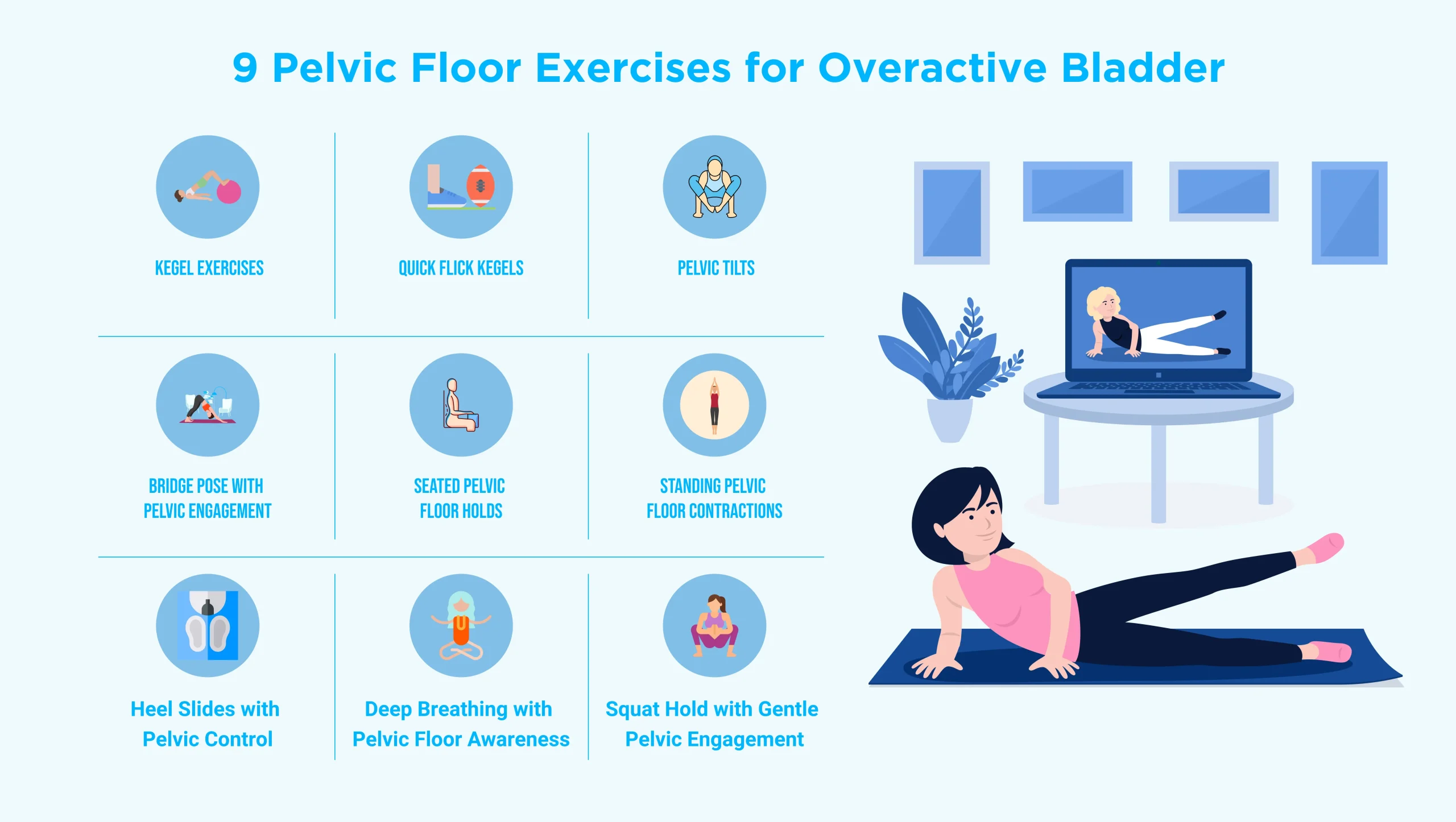
These workouts are not very intense, do not require any equipment, and can be performed at home. Their work is aimed at enhancing muscle strength, coordination, and control to promote the health of the bladder.
Kegels tighten the muscles of the pelvic floor that assist in the regulation of urine flow.
Step-by-step:
The muscles are accelerated to react to immediate demands because of quick flicks.
Step-by-step:
Pelvic tilts stimulate a combination of pelvic floor and lower abdominal muscles.
Step-by-step:
If you are still experiencing issues, then you can always consult the best pelvic health specialists in Velappanchavadi.
This practice enhances the pelvic floor and core stability.
Step-by-step:
Helps enhance sitting bladder functions, such as work or travelling.
Step-by-step:
Trains the pelvic muscles in daily activities such as walking and standing.
Step-by-step:
Enhances the coordination of leg motion with muscle control of the pelvis.
Step-by-step:
Helps relax and synchronize pelvic floor muscles and breathing.
Step-by-step:
Strengthens the pelvis and imitates activities of daily living.
Step-by-step:
Most healthcare providers recommend performing pelvic floor exercises once or twice daily.. It is more about consistency than intensity. Changes can be noticed only after a few weeks, so it is essential to be patient and practice.
In case of persistent symptoms or confusion, it is possible to talk about bladder health with a specialist, as this will help follow an appropriate exercise routine. A lot of individuals seek organized care of the pelvis using established urology departments.
Pelvic floor exercises offer a gentle yet effective way to manage overactive bladder symptoms. When they are done consistently and correctly, they may provide better muscle tone, bladder control and comfort in everyday life. While results may take time, guidance from specialists at the best hospital for urology in Chennai can help ensure the right approach and long-term improvement.
When the symptom persists or impacts on quality of life, then it can be helpful to seek the advice of a trained medical practitioner at Dr. Mehta’s Hospitals, so that they can develop an individual care plan. .Reach out to us to discuss a personalized care plan.