
It can feel unpleasant and even alarming to notice swelling in your legs or feet.. Many people experience swelling of the legs and feet, particularly after prolonged periods of standing or sitting. In many cases, it is temporary and improves with rest. However, persistent swelling may sometimes indicate an underlying health issue, such as kidney issues.
Understanding why leg and foot swelling occurs can help you recognise when it is a mere lifestyle problem and when it might require medical care. This article describes the relationship between the health of the kidneys and swelling of legs in straightforward and comforting language.
Leg swelling, medically known as edema, is a condition whereby excess fluid builds up in the tissues of the legs, ankles, or feet. This can make the skin look puffy or feel stretched, and even shoes may feel tighter than normal.
A 2015 study in India found that swelling was common during pregnancy, with about 67% of women affected. Among them, 49% experienced swelling in the legs, 33% in the sacral (lower back) region, and 14% in both areas.
Edema can occur due to several reasons, such as long sitting, hot weather, pregnancy, or some medical conditions. In some cases, leg and foot swelling may be linked to kidney-related fluid retention, when the body retains more fluid than normal.
The kidneys help maintain the body’s fluid balance. In cases where they are not operating effectively, fluid can build up in other body parts, especially the lower legs.
The kidneys play an important role in removing waste and maintaining fluid balance in the body. Excess water and salt are removed through urine to keep the balance healthy.
This balance can be affected when there is a change in kidney functioning. The body may retain extra fluid that might accumulate in tissues, causing swelling.
This kind of swelling is frequently found:
While kidney-related swelling can occur, it is necessary to keep in mind that other diseases can also lead to such symptoms. If the swelling persists or is accompanied by other unusual signs, it is always wise to consult a qualified specialist at one of the best kidney hospitals in Chennai for proper evaluation and timely care.
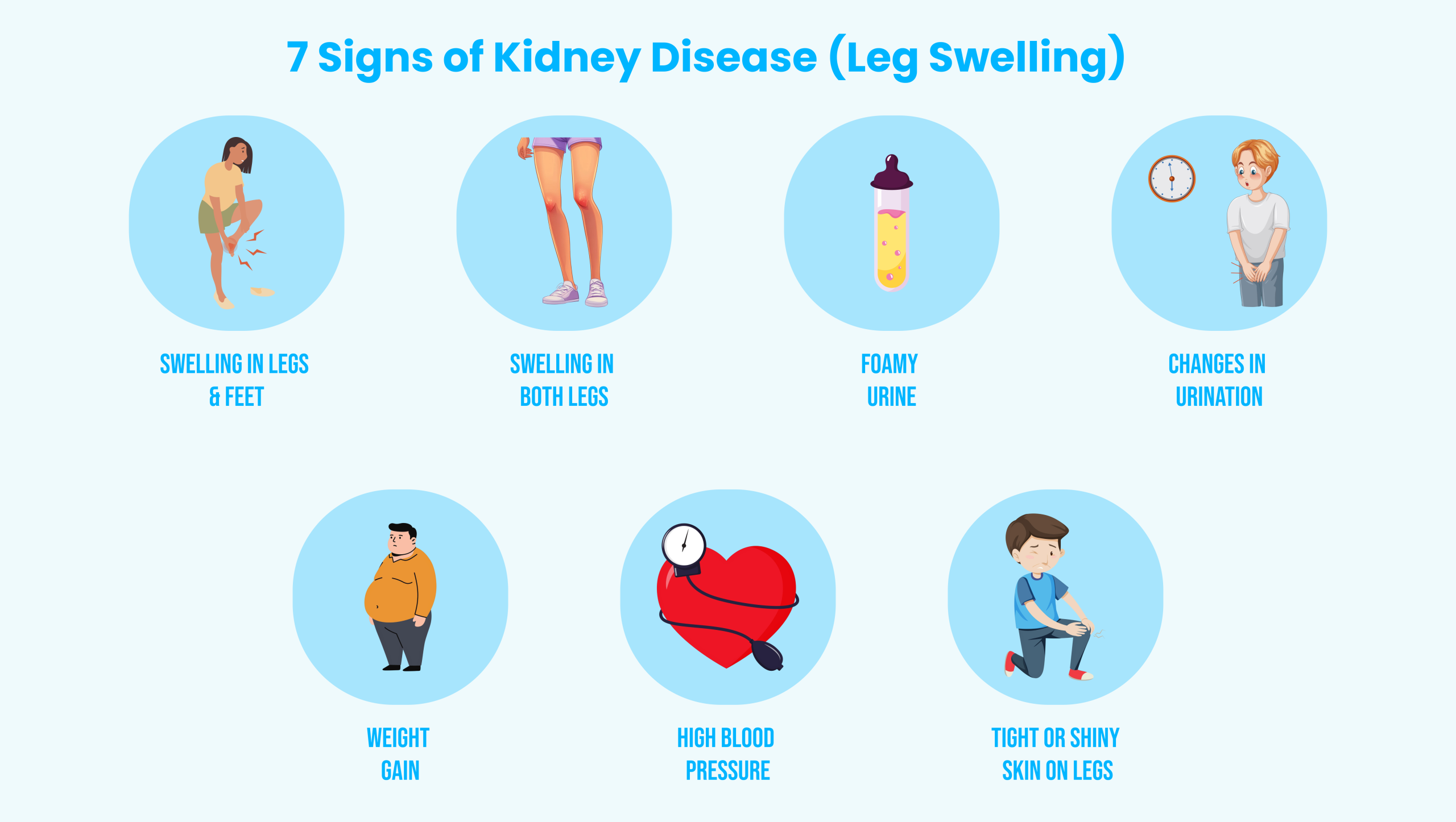
Leg swelling may sometimes occur along with other signs that indicate kidney involvement.
These symptoms may develop gradually and vary from person to person.. If such signs persist or become concerning, getting timely diagnostic tests from a reliable, trusted and advanced laboratory service can help doctors identify the cause and guide appropriate treatment.
Swelling in the legs can occur due to many reasons, not only kidney concerns. Understanding the pattern of swelling can help identify possible causes.
| Signs | Kidney Problem | Heart Problem | Injury / Other Cause |
| Affects both legs | Usually yes | Often yes | Usually one leg |
| Pain | Usually mild or absent | Sometimes | Often painful |
| Foamy urine | Yes | No | No |
As an example, injury-related swelling often involves a single leg and can be accompanied by pain. In contrast, kidney-related swelling usually occurs in both legs and can be accompanied by alterations in urine.
A common question is whether kidney stones can cause leg swelling.
Common symptoms of kidney stones include:
The primary symptom of kidney stones is not swelling of the legs. However, the fluid balance can be altered in case of impaired kidney functioning caused by complications.
If swelling occurs along with severe back pain or painful urination, it is advisable to seek medical attention to determine the precise cause. If symptoms become severe or sudden, seeking help from a hospital facility with 24/7 emergency care in Chennai can ensure prompt medical attention when every second matters.
If the swelling is mild and not linked to a serious condition, some basic steps can be taken to alleviate the pain.
These procedures are helpful in maintaining healthy circulation and can be used to alleviate temporary swelling.
Many patients seek medical help at a later stage, when kidney function may already have declined by nearly 75%.
You are advised to consider medical advice when:
Early assessment assists physicians in determining the reasons behind swelling in legs and feet and directs the proper treatment.
Leg or foot swelling can have many causes. While kidney issues can be one possible cause is the presence of swelling in legs and feet because of kidney issues, it is not the only one. Other health conditions, lifestyle and changes in circulation could be contributing factors.
Listening to the symptoms and getting medical consultation in time can prevent incorrect diagnosis and treatment. Most leg swelling causes can be addressed through early care and healthy habits.Consult a doctor for timely evaluation and appropriate care.
No. Many factors, such as prolonged sitting, pregnancy, or warm weather, can also cause swelling.
Yes, kidney-related swelling often appears in both legs due to fluid retention.
Severe dehydration can affect fluid balance, but swelling is usually linked to fluid retention rather than low fluid levels.
Kidney stones mainly cause pain and urinary symptoms. Leg swelling is usually linked to other conditions.
Elevating the legs, staying active, and reducing salt intake may help reduce mild swelling.
If swelling persists, worsens, or is accompanied by other symptoms, medical evaluation is recommended.