Water is one of the simplest and most essential nutrients for the human body. Since the early days, we have been instructed to drink more water to be healthy. However, when it comes to kidney health, a common question arises: how much water is actually good for the kidneys? Will an increase in water drinking always help, or sometimes cause more harm than good?
The blog aims to clear common doubts by explaining how much water to drink, when to drink it, and how to do so without stress or confusion.
Kidneys play a vital role in removing waste, balancing fluids, and maintaining overall wellbeing. Adequate water intake helps the kidneys perform these functions efficiently by flushing waste products out through urine.
In India, studies suggest that nearly one in six people may be living with some stage of chronic kidney disease, and this number is expected to rise over time. Research also shows that about 3.9 per cent of the population has reduced kidney function, meaning their kidneys are not filtering blood as efficiently as they should.
Adequate hydration can:
When the body does not receive enough fluids, the kidneys have to work harder to maintain balance. In the long run, this can have an impact on their comfort in operation. This is what makes moderate, proper hydration a frequent recommendation of routine kidney care.
Among the questions that people frequently ask is: How much water ought to be taken to enhance kidney functioning? There is no single answer that applies to everyone.
The water requirements are dependent on a number of factors, which include:
For most healthy adults in India, drinking water steadily throughout the day until urine appears light yellow is a simple and practical guideline.. Thirst also acts as a good indicator, although it should be addressed early rather than ignored.
One should not forget that the consumption of water should be comfortable rather than compulsory. Having more water does not necessarily imply a healthy kidney. Listening to your body’s needs and seeking balanced medical guidance such as a comprehensive kidney care approach at the best neuro hospital in Chennai supported by experienced medical specialists, as part of overall kidney care can help support long-term kidney well-being, which is why structured kidney care plays an important role in maintaining this balance.
An estimated 600 million people worldwide are affected by kidney damage. In India, about one in six individuals is living with some stage of chronic kidney disease, and experts expect this figure to increase by nearly 17 per cent over the coming decade.
Daily water needs vary across life stages. Below is a general guidance table, meant for healthy individuals. Personal needs may vary, so medical advice is always recommended when in doubt.
| Age Group | Recommended Daily Water Intake |
| Toddlers (1–3 years) | 1–1.3 litres |
| Children (4–8 years) | 1.3–1.7 litres |
| Children (9–13 years) | 1.7–2.1 litres |
| Teenagers (14–18 years) | 2–2.5 litres |
| Adults | 2–3 litres |
| Older adults | Based on thirst, health, and medical advice |
This intake includes water from plain drinking water as well as fluids from foods like fruits, vegetables, soups, and dals.
There is a misconception that people should drink plenty of water and that the kidneys will do the cleaning. Although hydration is necessary, overconsumption of water is not always desirable.
Excessive consumption of water beyond the body’s requirement can:
Individuals with certain medical histories, such as kidney-related issues, heart ailments, or hormonal disorders, can be recommended to maintain a regulated fluid consumption.
The key message is balance. People should drink water so that the body can be supported rather than drown. When there is uncertainty or sudden discomfort, timely medical attention as part of comprehensive, 24/7 care in Chennai can help ensure the body’s needs are assessed and addressed appropriately.
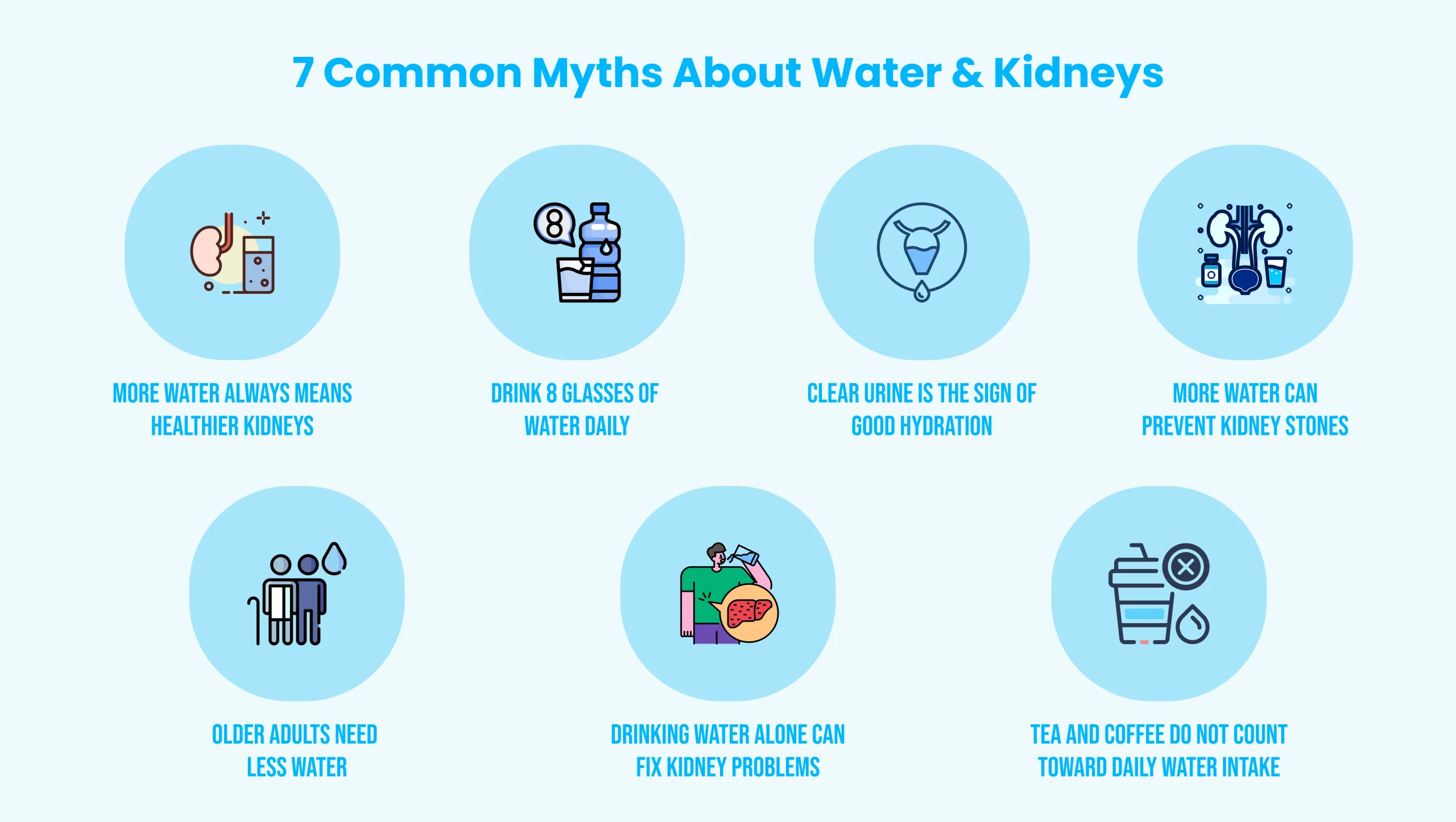
Most of the ideas about water and kidney health are transmitted in the form of advice, social media, or simple conversation. Although some of them hold some truth, others require a mild explanation so that you can comfortably take care of your kidneys and maintain a balance.
Although water is a vital component of kidney functioning, one cannot automatically make the kidneys healthier by drinking a lot of water. The optimum functioning of the kidneys is achieved when hydration is maintained. Excessive water can be uncomfortable or unbalancing at times, particularly among individuals with some health problems.
The concept of a definite number is not applicable to all. The requirements of water depend on age, body size, weather, the level of activity, and general health. It is usually better to listen to your body and take your drink steadily throughout the day than to count glasses.
Good hydration does not always have to be clear urine. A pale yellow urine is usually regarded as a positive indicator. Clear urine can also indicate excess fluid intake instead of optimum fluid balance.
The risk of kidney stones can be lowered with the assistance of sufficient hydration, although it is not the sole factor. It is also influenced by diet, metabolism and personal medical conditions. Water helps reduce risk, but it does not offer complete protection for everyone.
Even though tea and coffee have caffeine, they are a source of fluid in the day-to-day intake. They can even help in hydration when taken in moderation. If you still have any doubts or concerns about your kidney health, you can always get in touch with the expert nephrologists at Dr Mehta’s Hospitals, Chennai, to get all the answers and the right medical guidance you need.
The aging process causes the feeling of thirst to lessen, yet the body requires the appropriate fluids. Elderly people also require mild, frequent prompts to consume water in order to facilitate kidney activities and general well-being.
Water does not substitute medical assessment and treatment, although water helps maintain the health of the kidneys. Issues concerning the kidney usually require correct diagnosis, counseling, and subsequent treatment. Hydration is effective when used alongside professional medical recommendations.
Similarly, being aware of foods to avoid with kidney disease is an important part of supporting kidney health, but personalized dietary guidance from a nephrology expert can make sure your nutrition plan truly matches your medical needs.
Water is essential for kidney health, but drinking the right amount matters more than consuming large volumes. The important thing is to listen to your body, drink constantly throughout the day, and be aware of your own needs so that your kidneys will be able to work comfortably and efficiently.
It is not about strict rules related to healthy hydration. It is about balance, consistency, and making informed choices. Simple practices such as proper water consumption can be significant in the long-term care of the kidneys when supplemented with medical advice. Get in touch with our top specialists in Chennai to book your appointment now.
Most healthy adults may benefit from 2–3 litres per day, adjusted for climate and activity levels.
Water supports kidney function, but it does not replace medical treatment when needed.
Small sips are fine, but forcing large amounts is not recommended.
Adequate hydration may help reduce risk, but stone formation depends on multiple factors.
Fluid needs vary. This may not work for everyone, so consulting a doctor is important.
Yes, many foods contribute to daily fluid intake.