


Living with chronic kidney disease (CKD) often brings daily questions about diet, especially when it comes to protein.. Protein is an essential nutrient that supports muscle mass, immunity, and overall strength. At the same time, the kidneys play a key role in filtering the waste produced when protein is broken down. This is the reason why the consumption of proteins has to be carefully balanced in individuals with CKD.
The positive is that we do not have to avoid protein entirely. Protein has the potential to remain a component of a balanced and nutritious diet with the appropriate amount, timing and medical advice. This guide explains safe protein intake so you can make informed and confident dietary choices.
Safe protein intake means consuming the right amount, not too little and not excessive, to maintain strength without placing extra strain on the kidneys. Kidneys may not be able to filter the protein waste as well as before in patients with CKD. Eating more protein than required can increase this burden.
ICMR indicates that an Indian mature adult is supposed to take approximately 0.83g of protein per kilogram of body weight per day. This is approximately 54 grams per day among men and 46 grams per day among women.
On the other hand, inadequate protein intake can affect energy levels and muscle health. The key is moderation, not extreme restriction or excess. The goal is to align protein intake with the stage of CKD, overall health status, and physical activity levels.
When the body breaks down protein, waste products are formed. Healthy kidneys filter and remove these wastes efficiently. In CKD, this filtering process slows down, allowing waste to build up in the bloodstream.
Protein intake can be managed to:
Protein management is not about strict restriction. It is about thoughtful planning that protects kidney function while meeting the body’s nutritional needs. With the right guidance and timely support from experienced kidney specialists in Chennai, this balanced approach becomes easier to follow and more effective in the long run. Learn more about comprehensive kidney care here.
While many patients are diagnosed in the early stages, approximately 5.46% are identified at Stage 3. Delayed detection and limited access to timely care can lead some patients to progress to Stage 5, also known as end-stage renal disease (ESRD).
Protein needs vary depending on how well the kidneys are functioning. Doctors often assess this using the estimated glomerular filtration rate (eGFR).
Recommended Protein Intake by CKD Stage
| CKD Stage | Kidney Function (GFR) | Recommended Protein Intake | Notes |
| Stage 1–2 | 90 to 60 mL/min | 0.8–1.0 g/kg/day | Normal to slightly reduced intake |
| Stage 3 | 30–59 mL/min | 0.6–0.8 g/kg/day | Moderate protein control begins |
| Stage 4 | 15–29 mL/min | 0.6 g/kg/day | Careful protein planning is needed |
| Stage 5 (non-dialysis) | Below 15 mL/min | As advised by the doctor | Highly individualised |
| Dialysis | Variable | Higher needs | Protein needs increase |
These values serve as general guidelines. Individual requirements may vary based on age, body weight, activity level, and other medical conditions. This is why regular testing and professional evaluation are important to determine what your body truly needs.
One of the simplest methods to determine the daily protein requirements is the one that is based on body weight.
Daily protein range:
Hence, a patient weighing 60 kg with stage 3 CKD may need about 36-48 grams of protein per day, as recommended by the physician.
A dietitian can help convert this requirement into practical meal plans using commonly consumed Indian foods. Personalized guidance becomes especially important when 24/7 care, timely decisions and continuous medical support are needed.
Maintaining the right balance is important. Both excess and deficiency can affect health.
Excessive consumption of protein can:
Weight loss or fitness diets that contain high levels of protein are not always appropriate in individuals with CKD without a doctor’s recommendation.
A deficiency in protein can:
Therefore, protein should not be eliminated but adjusted gradually under medical supervision. A thoughtful approach like this helps the body adapt without causing sudden stress. A careful and gradual approach also applies to other aspects of kidney health management like ways of managing and supporting the body naturally, like methods discussed for passing a kidney stone without invasive procedures.
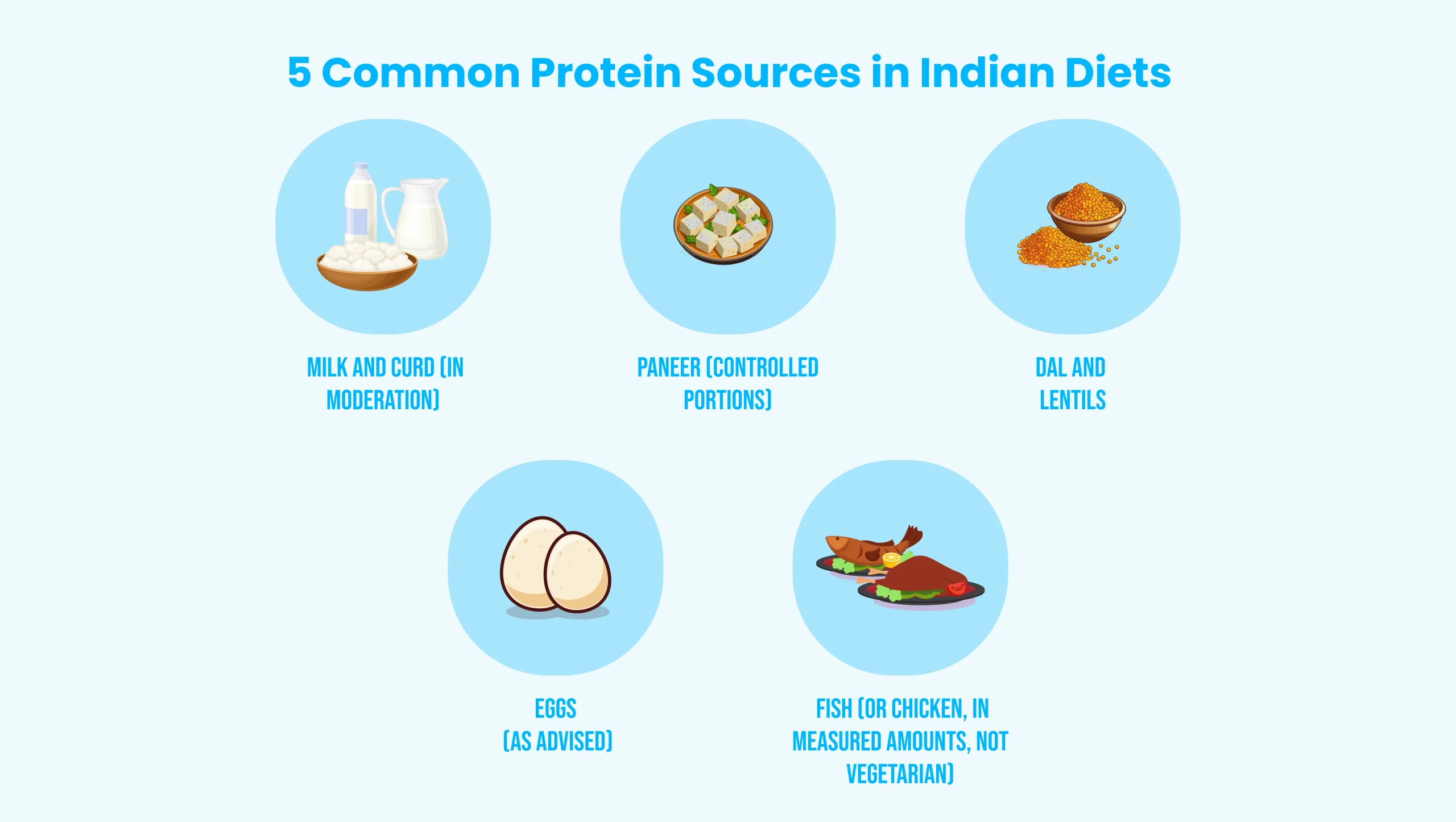
The quality of the protein is as important as the quantity.
Common Protein Sources in Indian Diets
A balanced mix of plant and animal protein sources may be recommended, depending on individual dietary needs.
Certain dietary habits may unintentionally affect kidney health.
Avoid:
Professionally directed simple adjustments are much more productive than radical ones.
Diets are complemented by daily habits:
These measures help in general kidney comfort and stability.
Protein remains an important part of nutrition for individuals with chronic kidney disease. The trick is to select the appropriate quantity at the appropriate stage and not to eliminate protein entirely. With structured dietary planning and regular medical guidance, individuals with CKD can maintain strength, energy, and overall well-being, especially more so with the right guidance from Dr Mehta’s Hospitals, one of the leading multispeciality hospital in Chennai.
An individualised strategy is effective. In case you do not know how much protein you need, a doctor or dietician can work out a structure that fits your body and lifestyle. Consult your nephrologist or renal dietician to receive a personalized plan tailored to your needs..
No. Protein is necessary for the body. The quantity needs adjustment, not complete elimination.
Vegetarian protein sources can be suitable when consumed in appropriate quantities and balance.
Yes. Protein requirements may change depending on the CKD stage and treatment plan.
Yes. Individuals on dialysis often require higher protein intake, as advised by their doctor.
Moderate physical activity supports muscle health, however, protein intake should continue to follow medical guidance.
A nephrologist or renal dietitian is best suited to guide protein intake based on laboratory results and overall health status.