
It is natural to feel concerned when you hear that your creatinine level is higher than normal. Creatinine is a normal blood test value, and slight variations do not necessarily indicate something serious. In most instances, the levels may go up temporarily because of normal everyday causes like hydration, food or exercise.
Knowledge of what creatinine is, why levels might rise, and what can be done to help manage the situation can be informative and reassuring. This is a guide that breaks down the topic in easy terms so that you can make informed and relaxed decisions regarding your health.
Creatinine is a waste substance produced naturally in the body as a result of everyday muscle activity. It enters the bloodstream, is filtered by the kidneys, and is excreted in the urine.
Since the kidneys are responsible for removing creatinine, doctors often use it as a simple indicator of kidney function. Creatinine levels are generally healthy when the kidneys are functioning comfortably.
One should bear in mind that creatinine levels can differ in individuals based on their age, muscle mass, hydration, and health level. According to studies, about 26% of people between 61 and 85 years, and nearly 36% of those above 85 years, showed abnormal creatinine values.
The level of creatinine is determined by a blood test. Normal ranges may fluctuate across laboratories slightly, but common reference values are presented below.
| Group | Normal Range |
| Adult men | 0.7 – 1.3 |
| Adult women | 0.6 – 1.1 |
| Older adults | May be slightly lower due to reduced muscle mass |
A value slightly outside this range does not automatically mean there is a problem. Doctors usually interpret creatinine levels along with other tests and clinical findings.
Excessive creatinine may be a result of numerous causes. Here are some causes of it:
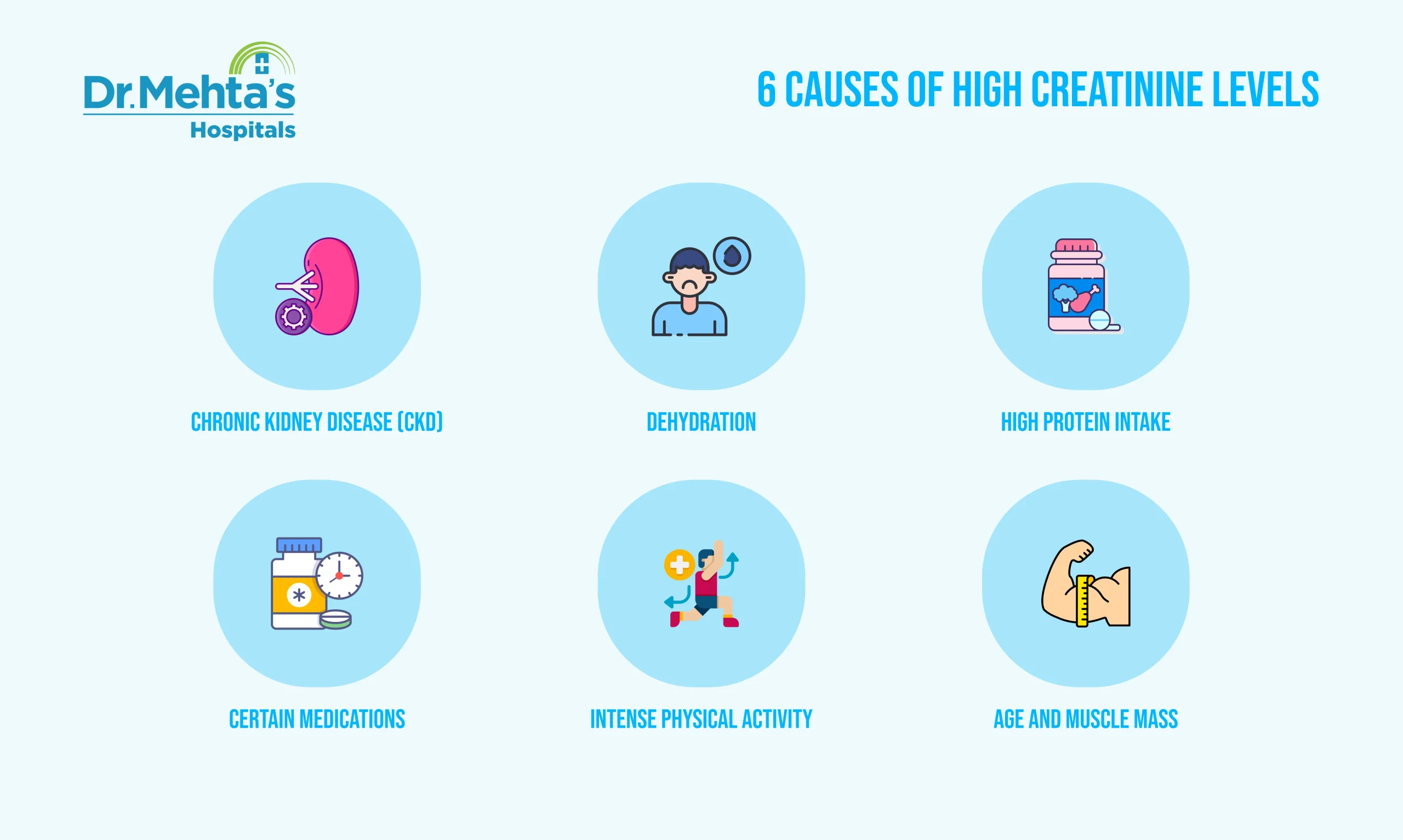
Chronic Kidney Disease (CKD) is a serious public health concern in India. An estimated 138 million people are affected, making India the country with the second-highest CKD burden in the world.
Chronic kidney disease is a gradual decline in the functioning of the kidneys. Creatinine can remain in the blood longer when the kidneys are not filtering effectively.
CKD usually progresses slowly and may not cause noticeable symptoms in its early stages. Consistent health examinations assist in the early diagnosis and prompt treatment.
Not drinking enough fluids can cause a temporary rise in blood creatinine levels. Under these circumstances, levels normally improve when the body is hydrated.
This is among the most frequent and correctable causes of a transient increase in creatinine. For a clearer understanding of kidney health and when expert evaluation may be helpful, guidance from a dedicated nephrology team in Chennai can make a meaningful difference.
Eating large amounts of protein-rich foods may slightly increase creatinine levels, especially in individuals with existing kidney concerns.
It is usually suggested to have a balanced diet and not to be restricted. Physicians can advise on changes in diet.
Certain drugs may influence renal activity or creatinine levels. These may include certain pain relievers, antibiotics, or long-term medications used for other conditions.
Do not discontinue or switch medicines without consulting a physician. Doctors pay special attention to the history of medication when examining test results, and knowing which labs to choose can help ensure accurate diagnosis and ongoing care.
Vigorous exercise may temporarily increase creatinine levels due to increased muscle breakdown. This normally subsides with rest and sufficient hydration.
Individuals with greater muscle mass can naturally have slightly greater creatinine levels. Likewise, there can be a decrease in the levels in older adults since the muscle mass is smaller.
This is the reason why a creatinine value is never taken in isolation but always in context.
The level of creatinine can often remain unnoticed, particularly at the beginning. The symptoms are usually associated with the functioning of the kidneys when they occur.
Some people may notice:
These symptoms are not specific and may occur for many reasons. Medical evaluation helps determine the exact cause.
In many cases, yes. The ability to decrease the creatinine levels is dependent on the cause.
If high creatinine is linked to chronic kidney disease, the focus is usually on slowing progression and supporting overall kidney health rather than only reducing the number.
When well taken care of and regularly monitored, most individuals can have stable kidney functionality over a period of time.
You need to see a physician when:
Early medical advice helps address concerns at an earlier and more manageable stage.
To have a better understanding of kidney health, doctors might order further tests like urine, imaging, or estimated glomerular filtration rate (eGFR).
These measures support overall health and help maintain proper kidney function.
Hearing about high creatinine levels can be worrying; however, it does not always indicate a serious problem. Most reasons are acute and can be handled by prompt treatment and easy changes in lifestyle. Knowing the causes of the numbers will minimize unnecessary anxiety and promote positive health decisions.
Kidney health can be facilitated in many cases over time with regular care, balanced habits, and medical advice. Consult your doctor for proper evaluation and guidance.
No. Temporary factors like dehydration or exercise can also raise creatinine levels.
If dehydration is the cause, adequate hydration may help normalise levels.
Yes. Muscle mass changes with age can influence creatinine values.
Not necessarily. Dietary changes should only be made with medical advice.
This depends on individual health conditions. Your doctor will guide the frequency.
Yes. Balanced diet, hydration, and regular check-ups play an important role.