Urology is a critical area of medicine that deals with the well-being of the urinary system and the male reproductive system. These systems help eliminate wastes in the body, maintain fluid balance and facilitate reproductive health. Urologic diseases are widespread and may affect individuals of all ages, including infants and older adults. With timely evaluation and appropriate care, most urologic conditions can be effectively managed, helping individuals maintain comfort and confidence.
The guide is a patient-friendly and understandable overview of urology, with a discussion of common conditions, diagnostic process, treatment options, and current developments in care.
Urology is a broad field dealing with a variety of disorders of the urinary system and male reproductive health. Urology has several subspecialties that target specific age groups, conditions, and treatment methods, which provide patients with a unique approach to health care depending on their needs and life stage.
Adult urology deals with urinary and reproductive issues, as they are common in adults. These disorders can be acquired over time and can frequently impair everyday life and comfort.
Common adult urologic conditions
Some of the problems that adults might develop include urinary tract infections, kidney stones, problems with bladder control, enlarged prostate, and altered urinary flow. These are modern-day ailments that can often be treated successfully through proper medical advice.
Age-related urinary and prostate issues
With age, the bladder strength and prostate size will change. This can cause frequent urination, an inadequate urine stream or an inability to empty the bladder. Early assessment assists in controlling symptoms and improving long-term comfort. Seeking early evaluation at an advanced urology centre in Chennai can help manage these symptoms effectively and support long-term comfort and quality of life.
Pediatric Urology
Pediatric urology focuses on urinary and genital disorders in infants, children, and adolescents. These disorders usually need close observation and treatment according to age.
Congenital and childhood urinary conditions
Other children are born with urinary tract deviations, which may interfere with normal urine flow or bladder control. As they grow, others can develop urinary infections or control problems.
Importance of early diagnosis
Early detection of urologic conditions is beneficial in preserving the health of the kidneys, promoting normal growth, and minimizing the risk of emerging complications. Early care also reassures parents and ensures timely treatment. Timely consultation with experienced doctors in Chetpet can also reassure parents and ensure that the proper care is started at the appropriate time.
Andrology focuses on male reproductive and sexual health. This field deals with issues related to fertility, hormone balance, and sexual performance.
Male reproductive and sexual health.
Sperm health conditions, hormone levels, or sexual wellbeing may impact physical and emotional health. Appropriate assessment assists in recognizing curable causes and aids in the general quality of life.
Endourology is a specialist field that deals with the diagnosis and treatment of kidney and urinary stones through minimally invasive procedures.
Minimally invasive stone treatment.
Modern procedures enable the treatment of stones using small tools without huge incisions. These procedures tend to reduce the recovery period, discomfort and allow one to resume normal activities sooner.
The health of men in urology is a vast area of issues that influence wellbeing in various life stages.
Sexual health, hormonal health, and prostate health.
Urinary comfort, hormone balance and prostate health are deeply connected. Check-ups, lifestyle counseling, and early detection of symptoms may be used to ensure long-term health and confidence.
Kidneys are also critical in the process of waste filtration and fluid balance in the body. Urologists deal with the broad scope of kidney-related diseases, including early detection, symptomatic treatment, and kidney maintenance.
One of the most prevalent kidney conditions in the urology practice is kidney stones.
In India, kidney stones are very prevalent, with a prevalence rate of about 12 percent, which is comparable to the world. The prevalence is even higher in Northern India, commonly referred to as the stone belt, up to 15%. Hot weather, dietary habits and genetic predisposition are some of the factors that cause this condition, which affects millions of people annually and is likely to recur in most patients.
Kidney stones are developed when the minerals in the urine accumulate and solidify with time. Dehydration, dietary habits, and some metabolic factors may increase the risk. Individuals can experience pain in the lower back or side, alterations in urine flow, or pain during urination. Preventive measures involve keeping hydrated, eating in balance, and taking medical counsel depending on the risk factors of a particular individual. Connecting with trusted doctors in Velappanchavadi can help assess your risk and guide personalized prevention and care.
Hydronephrosis is the swelling of the kidney caused by a blockage in urine flow.
The condition may occur when the kidney fails to drain urine into the bladder normally. Some of the causes may be stones, structural disparities, or pressure on the surrounding tissues. Early detection assists in alleviating the burden on the kidney and aids in normal kidney functioning. The treatment aims at clearing the blockage and keeping track of kidney health.
Kidney cancer is characterized by the proliferation of cancerous cells in the kidney and is mainly diagnosed during the imaging process for other medical issues.
Kidney cancer can be of various types, and it is usually diagnosed through imaging examinations and additional assessment. Therapy will vary based on the size, type, and stage of the disease and might involve observation, excision of the affected tissues, or alternative therapies. Early detection is essential for the realization of good results and maintenance of kidney health.
The bladder is vital in the storage and discharge of urine. The impact on bladder health may affect daily comfort, sleep, and confidence. The scope of the work of urologists is rich, and they are engaged in the treatment of various diseases related to the bladder, the preservation of regular bladder activity, and the quality of life, with the use of individual treatment.
Bladder cancer is a disease in which the abnormal cells grow in the lining. It may be found early since patients notice alterations in urination.
Some of the risk factors might be smoking, chronic exposure to some chemicals and older age. It may start with such symptoms as blood in the urine, frequent urination, or pain during urine passing. These symptoms do not always indicate cancer but should be evaluated by a urologist to determine the underlying cause. Early diagnosis promotes improved results and assists in making proper treatment.
Overactive bladder is a widespread disorder that influences the ability to control the bladder and everyday life.
Individuals with an overactive bladder might experience the urge to urinate urgently, have to pass urine after a short period, or wake up several times during the night to go to the bathroom. Therapies to improve behaviour, including bladder training, scheduled voiding, and fluid management, often start with the management. These strategies aid in the enhancement of bladder control and urgency. Medications may be included in specific scenarios to aid in the process of relieving symptoms.
Urinary incontinence is the involuntary discharge of urine and may occur in both men and women.
Incontinence has various forms, such as stress incontinence, urge incontinence, and mixed incontinence. The therapy is based on the nature and the intensity of symptoms. This could be in the form of pelvic floor exercises, lifestyle change, bladder training, medications, or supportive procedures. Through adequate guidance, most people have found a lot of improvement and are again confident in their day-to-day life.
Interstitial cystitis refers to a chronic bladder disease that influences comfort and urinary frequency.
The condition can lead to constant discomfort in the bladder, frequent urination, and lower abdominal pressure. The symptoms may differ in each person, and they might evolve. The management also concentrates on relief of symptoms using lifestyle modification, bladder-friendly habits, stress management, and medical support. An individual treatment strategy will assist people to cope with the symptoms and live comfortably every day.
Neurogenic bladder is a condition that results when nerve-related conditions impair the normal functioning of the bladder.
Brain, spinal cord, or nerve conditions may disrupt the control of the bladder. This can result in difficulty emptying the bladder or problems with urine storage. The treatment plans are customized to meet the needs of a person, and they are meant to safeguard the health of the kidneys, to enable safe bladder emptying, and to enhance the quality of life. Frequent check-ups are helpful to keep the urinary system healthy in the long run.
Bladder stones are mineral deposits that are hard and develop within the bladder.
Bladder stones tend to form when the urine is not fully discharged from the bladder. They can bring discomfort, frequent urination, or alteration of the urine stream. Treatment is typically done by removing the stones and treating the cause to prevent recurrence. Today, urologic methods enable safe and effective removal of stones with a minimum disturbance of normal life.
UTI is prevalent and may involve the bladder and other urinary structures.
Some people suffer recurrent UTIs, which may be attributed to anatomical, bladder emptying, and hygiene habits. Prevention measures involve proper hydration, proper bathroom manners, and a medical check-up to determine underlying factors. Under proper care, the rate of infection may also be minimized, which can help keep the bladder comfortable and healthy.
The prostate is a small gland and is significant in the reproductive health of a man. Prostate health is subject to changes as men age, and this can impact their daily routines and their urinary comfort. Urologists concentrate on initial assessment and individual attention to address the issues of the prostate.
Benign Prostatic Hyperplasia is a non-malignant prostate gland growth and is a common occurrence in older men. With the enlargement of the prostate, it can encroach on the urethra, which causes symptoms like weak urine flow, frequent urine flow, difficulty in starting or stopping urine flow and waking up in the night to pass urine. BPH may be treated with lifestyle modification, pharmacotherapy, and the least invasive surgeries that can help alleviate urinary discomfort and improve quality of life.
One of the most prevalent prostate-related disorders in men, particularly as they age, is prostate cancer. Early detection of prostate cancer is done through screening procedures like PSA testing and imaging. Staging enables doctors to know the severity of the condition and direct the planning of treatment. Therapeutic choices are based on the disease stage, general health, and specific patient requirements and may involve active surveillance, surgery, radiotherapy, or targeted therapies. Early diagnosis helps in improving results.
Prostatitis is an inflammation of the prostate gland and may be experienced by men of various ages. The symptoms may be pelvic pain, changes in the urine, or pain during urination. Infection and non-infectious inflammation can cause prostatitis. Therapy is aimed at symptom management using drugs, lifestyle advice, and supportive care to enable patients to resume normal lifestyles comfortably.
Genital health and male reproductive health are significant in terms of physical health, emotional self-confidence, and family planning. Urologists deal with sexual functioning, fertility, and genital health in a sensitive and personalised manner.
Erectile dysfunction is a common disorder that interferes with the capacity of a man to attain or sustain an erection. The ED can be associated with changes in blood flow, nerve disorders, hormonal disequilibrium, or emotional issues like stress and anxiety. Treatment plans are designed to meet individual needs, and assessment is aimed at finding the root causes. In most cases, treatment combines medical therapy with lifestyle and behavioural guidance.
Premature ejaculation is a problem in which the ejaculation comes sooner than is desired during sexual intercourse.
Diagnosis consists of knowing the symptoms, frequency, and causative factors. To treat it, counselling, behavioural techniques, and medication may be used. Many men may become more sexually confident with proper care.
Male infertility is the problem of not being able to get pregnant because of problems with sperm health or the functioning of the reproductive system.
Diagnosis could involve semen analysis, hormonal tests, and X-rays. The treatment is based on the cause and may be medical, lifestyle modification, or assisted reproductive technology. Early assessment and care advice are helpful to many couples.
The presence of fibrous tissue in the penis characterizes Peyronie’s disease.
This disorder can lead to penile curvature and pain during erections. The goals of treatment are to decrease symptoms, increase functioning, and facilitate sexual comfort using medical or procedural therapy, depending on severity.
Phimosis is a condition in which the foreskin is not able to fully cover the head of the penis entirely.
It can lead to hygiene issues or unease. Depending on the severity and symptoms, treatment may be done through topical medication or minor surgical procedures.
A hydrocele refers to the accumulation of fluid around the testicles or both testicles. It is non-painful and is normally not harmful. Treatment may be prescribed in case the swelling is uncomfortable or enlarged.
Testicular cancer is not very prevalent, but it usually occurs among younger men. High success rates are achieved through early detection by awareness and examination. Management strategies are based on the nature and stage and seek to maintain long-term health and functioning.
Testicular torsion is a condition that arises when the spermatic cord is twisted, which influences the blood flow to the testicle. This is a condition that needs urgent medical care. Early intervention is beneficial in safeguarding the testicular functioning and general reproductive health.
Pediatric urology is concerned with urinary and genital diseases in infants, children and adolescents. Most of these conditions may be controlled at an early age. Early diagnosis assists in promoting healthy development, preserving renal activities, and giving parents hope by providing proper directions and treatment.
The Vesicoureteral reflux is a condition where the urine moves from the bladder to the kidneys.
Such retrograde flow can raise the risk of urinary infections and overload the kidneys in the long term. VUR is commonly diagnosed when children are assessed due to recurrent urinary infections. The management is based on the severity and may involve monitoring, medication, or surgery. This condition is acquired by many children who grow out of it with early care.
Hypospadias is a developmental disorder of the urethral opening in men.
The urethral opening is found along the underside rather than opening at the tip of the penis. Hypospadias is usually diagnosed at birth. Surgery is typically done at an early age and is done to normalize the functionality and the look. The results in most cases are very positive with appropriate age treatment.
An obstruction condition is encountered in male infants in the form of posterior urethral valves. This is a condition where there is additional tissue in the urethra that obstructs the normal passage of urine. It may be identified by prenatal scans or early symptoms of birth. Obstruction should be relieved with early intervention to facilitate normal urine flow and take care of kidney health with close monitoring and treatment.
An undescended testicle is a condition where the testicles fail to move into the scrotum as usual.
The condition is typically diagnosed in infancy or early childhood. Surgery is usually advised during the initial years of life to aid in normal development and subsequent reproductive health. The threat of complications later in life is also minimized through early treatment.
Bedwetting is a widespread childhood disease that interferes with bladder control at sleep time.
The causes of bedwetting include delayed bladder development, a deep sleep pattern or family history. It often improves with age. Management focuses on reassurance, behavioural interventions, bladder training and parent and child supportive guidance. Encouragement and patience are relevant in management.
UTI is comparatively prevalent among children and may need close consideration.
Recurring urinary infection may be an indicator of urinary tract anomalies or problems with bladder functioning. Assessment assists in the determination of contributory factors and the prevention plans. When well treated and followed, a majority of the children do well and have healthy urinary functioning.
Proper diagnosis is a significant aspect of urologic care. The diagnostic tests and investigations assist urologists in the comprehension of the cause of the symptoms, the evaluation of the organ functioning, and the arrangement of the most appropriate treatment. The choice of these tests depends on age, symptoms, and medical history to make sure that they are comfortable and clear to patients.
Cystoscopy is a diagnostic procedure that allows the urologist to examine the inner part of the bladder and urethra with a flexible and thin device.
The test is used for diagnose the causes of urinary symptoms like difficulty passing urine, recurring infections, or blood in the urine. It is usually conducted to identify the condition of the bladder and determine any further treatment required.
Ureteroscopy is a diagnostic procedure used to examine the ureters, which carry urine from the kidneys to the bladder.
It is commonly prescribed to assess stones, obstruction, or stenosis of the urinary tract. This process also enables physicians to correct some of the conditions in the same process, eliminating the necessity of further procedures.
Urodynamic testing is a test that assesses the effectiveness of the bladder to hold and pass urine.
The test is practical when an individual is leaking urine, having frequent urination or difficulty in emptying the bladder. It offers valuable data concerning the bladder pressure, capacity, and muscle functionality, which helps inform individual treatment plans.
The PSA test is a blood test used to assess prostate health.
It also determines the level of prostate-specific antigen that may be used in detecting prostate-related conditions. PSA is a standard medical procedure that is usually employed to conduct routine check-ups on the prostate gland to assist doctors in determining whether further tests are necessary.
Prostate MRI is an advanced imaging test that provides detailed images of the prostate gland.
It is usually prescribed in cases of high levels of PSA or in cases where further examination is required. MRI assists physicians in having a clear picture of the prostate structure and assists in proper diagnosis and treatment planning.
A prostate biopsy is a procedure that includes the removal of small samples of tissue from the prostate and its examination.
This test is conducted in the case of imaging or blood tests, which indicate any changes requiring additional examination. The biopsy is used for verify the results and assist in the right course of treatment.
One of the most essential tests in the process of assessing male fertility is the semen analysis.
It analyzes sperm count, movement and structure. This test may be used to determine possible causes of fertility issues and provide further treatment when necessary.
VCUG is a type of imaging that is regularly employed in children to measure urine flow.
It is used for determine when the urine is moving in a reverse direction towards the kidneys or when blockages are possible. VCUG is significant in the assessment of recurring urinary infections and aids in the healthy development of the kidneys in children.
Urologic surgical practices and interventions are tailored to deal with a broad spectrum of urinary and reproductive disorders, with patient comfort and healing being put first. Through medical technology, most of the procedures are now minimally invasive, which means that they may be discharged sooner and resume normal lives faster. Treatment options are based on the condition, severity, age, and general health of the patient.
The treatment of kidney stones is usually done by means of safe and efficient stone removal.
ESWL
Extracorporeal Shock Wave Lithotripsy includes the use of sound waves to destroy stones into smaller particles so that they may pass through urine naturally. It is commonly applied to smaller stones and does not necessitate surgical incisions.
PCNL
Percutaneous Nephrolithotomy applies to larger or complex stones in the kidney. The kidney is directly accessed through a small opening, and all the stones are removed with precision.
Ureteroscopic Lithotripsy
In this technique, a small tool is passed through the urinary tract to access and dislodge stones. It is typically applied to the stones, which are in the ureter or lower kidney and recovery is fast.
The purposes of Benign Prostatic Hyperplasia surgeries are to alleviate urinary symptoms following the enlargement of the prostate.
TURP
Transurethral Resection of the Prostate is a procedure to eliminate the extra prostate tissue by using the urinary passage to enhance the urine flow.
HoLEP
Holmium Laser Enucleation of the Prostate is a laser energy technique that removes tissue obstruction and applies to various prostate sizes.
UroLift
UroLift is the insertion of small implants to lift prostate tissue out of the urethra to assist in enhancing urine flow without removing tissue.
Rezum
Rezum applies water vapour treatment to decrease the size of the prostate tissue and alleviate urinary symptoms in the long run.
The surgeries that involve urologic cancers aim at removing the affected tissue but maintaining function whenever possible.
Radical Prostatectomy
This is the surgery that removes the prostate gland, and it is applied in the management of prostate cancer, depending on the stage and health of the patient.
TURBT
The Transurethral Resection of Bladder Tumour is a procedure that is applied to diagnose and treat bladder tumours with the help of the urinary passage.
Cystectomy
Cystectomy is performed to remove part or the entire bladder, depending on the severity of the disease.
Radical Nephrectomy
This is done when kidney cancer has taken over a great part of the organ and the affected kidney is removed using this surgery.
The surgeries in pediatric urology are meant to rectify structural abnormalities and promote normal development.
Pyeloplasty
This surgery is used for fix obstructions between the ureter and kidney, which enables urine to pass in its correct direction.
Hypospadias Repair
Hypospadias repair recovers the anatomical location of the urethral orifice and enhances functioning.
Orchiopexy
Orchiopexy is the procedure carried out to move the undescended testicle into the scrotum in order to facilitate healthy growth.
Ureteral Reimplantation
This operation fixes distorted urine flow exiting the bladder to the kidneys, which will contribute to avoiding frequent infections.
Circumcision
Circumcision may be medically or hygienically advised.
Vasectomy
A vasectomy is a permanent procedure that removes birth control in men.
Penile Implant
In some exceptional cases, penile implants are employed to augment the erectile functionality in cases where other therapies fail.
Sling Procedures
Sling surgeries are also used to control urinary leakage, which occurs due to the urethra being overstretched.
Artificial Urinary Sphincter.
The device is used for regulate the urine flow of patients with severe urinary leakage.
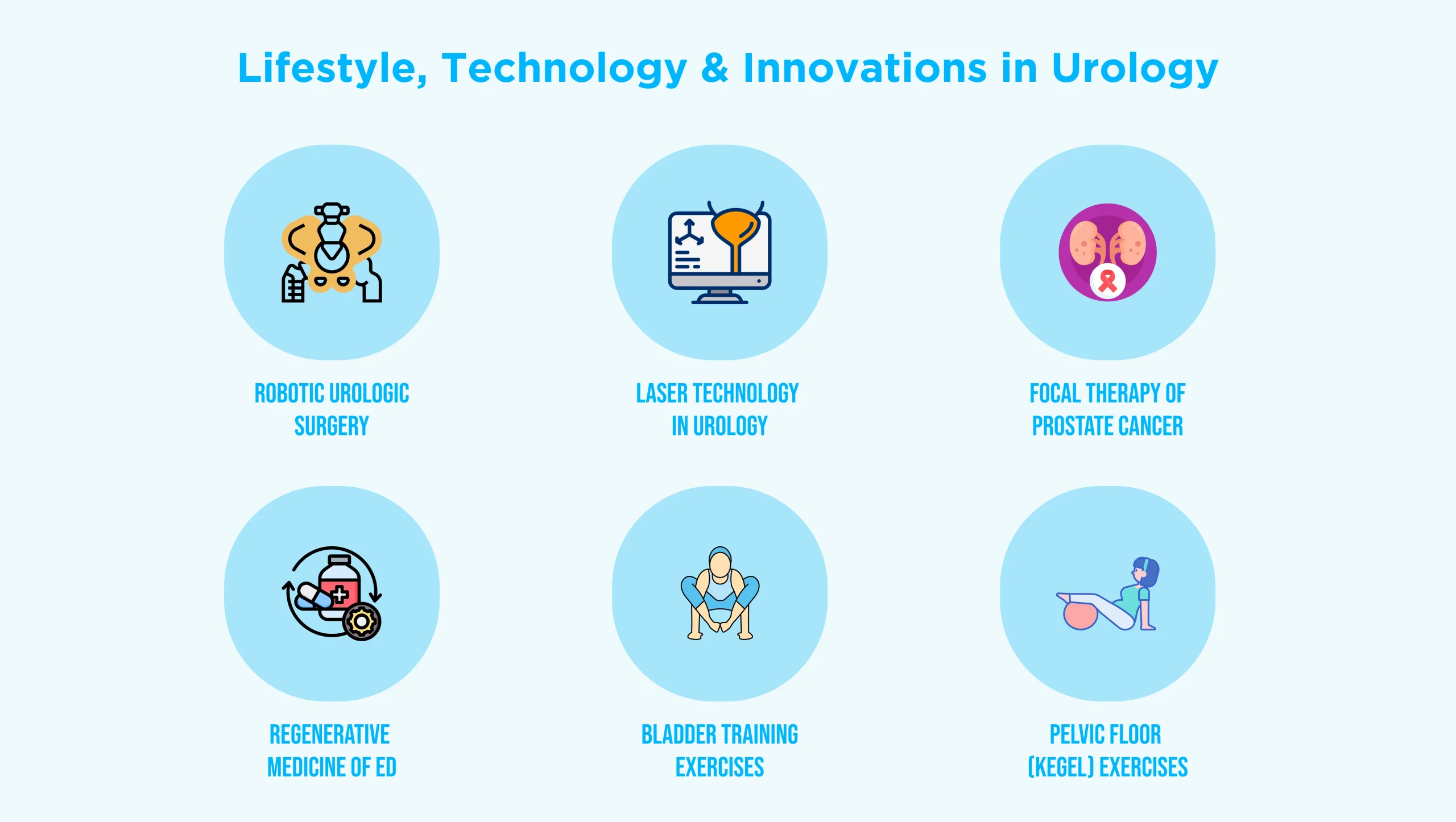
The field of urology has developed a lot over time, integrating both medical knowledge and technology, as well as lifestyle-oriented care. Contemporary urologic care is not just about curing the diseases but also enhancing comfort, healing, and overall health. These inventions assist patients in having improved results without much interruption in everyday life.
Robotic urologic surgery enables physicians to execute complicated tasks with greater accuracy and control. With the assistance of robots, surgeons are able to work with small incisions, but with great precision. The solution tends to result in a decrease in tissue strain, better planning of surgery and a better recovery of patients who have their procedures involving the prostate, kidney, or bladder.
Laser technology has revolutionized the management of most urologic conditions. It is commonly employed in the removal of kidney stones, in prostate surgery and in some cases of the bladder. Lasers enable specific treatment with minimally adverse effects on the surrounding tissues, which contributes to reducing pain and contributing to faster recovery. These approaches are now integral to modern urologic care.
Focal therapy includes the application of targeted energy to treat particular parts of the prostate but spares healthy tissue. One such treatment method is known as High-Intensity Focused Ultrasound (HIFU), which targets the affected regions without necessitating massive surgical cuts. This is a method of retaining urinary control and sex in the chosen patients and treating the condition.
Shockwave therapy is a non-invasive therapy applied in a selected set of cases of erectile dysfunction. It acts by enhancing blood circulation in the penile tissue, which promotes natural healing. The treatment is included in an increasing interest in regenerative medicine, which provides supportive care to be used in addition to medical treatment plans.
Bladder training exercises may be used to control the bladder and decrease the urge to urinate. These exercises include planned voiding and extending the time interval between visits to the bathroom. Bladder training is one method that can assist individuals to regain confidence and to learn how to handle urinary symptoms in their lives with ease, with practice.
Pelvic floor exercises enhance the muscles that underlie the bladder and urinary control. They help men and women alike, particularly in controlling urinary leakage. These exercises help to enhance muscle support with long-term benefits on bladder health.
With age, prostate health is becoming a more critical concern for men. Frequent check-ups, good lifestyle, and early detection of urinary changes are used to ensure comfort and avoid future distress. Remaining active and alert contributes to long-term urinary and reproductive health.
Urology is significant in the preservation of urinary and reproductive health across all ages. From childhood conditions to age-related concerns, early assessment and appropriate treatment help manage symptoms, protect organ function, and improve comfort.
Most urologic conditions may be effectively treated today with a patient-centred approach due to the progress in the field of diagnostics, minimally invasive operations, and supportive lifestyle strategies.
Being mindful of the initial symptoms, practising good health, and consulting a doctor may be a significant step to long-term health. Be it a question of urinary wellbeing, prostate care or reproductive functionality, contemporary urology provides secure, dependable and customised care that contributes to improved quality of life. Contact us to start your treatment now.
A urologist should be consulted if you notice changes in urination, recurrent urinary infections, lower abdominal pain, or concerns related to the prostate or reproductive health.
Yes, urologic conditions can occur in children, including urinary infections and congenital abnormalities. Most of them can be controlled, particularly when they are detected in time and treated accordingly.
Many urologic conditions can be managed with medications, lifestyle changes, physiotherapy, or minimally invasive procedures. In most cases, surgery is the last option that is considered when other alternatives fail or are inappropriate.
Prostate enlargement is a common age-related condition and can usually be managed effectively.. Although it can lead to urinary symptoms, prompt assessment and treatment may be used to sustain comfort and normal functioning.
Long-term urologic health can be supported by staying well hydrated, maintaining a healthy lifestyle, managing chronic conditions, and having regular medical check-ups.