Your heart begins with what you eat. As heart complications rise in India, especially among young adults, making the right food choices can go a long way in preventing heart-related issues. This guide walks you through the most heart-healthy foods, ideal dietary habits, and what to avoid, all presented in a simple and encouraging way for everyday life.
A heart-healthy diet is all about balance, moderation, and consistency. Here’s what it should ideally include:
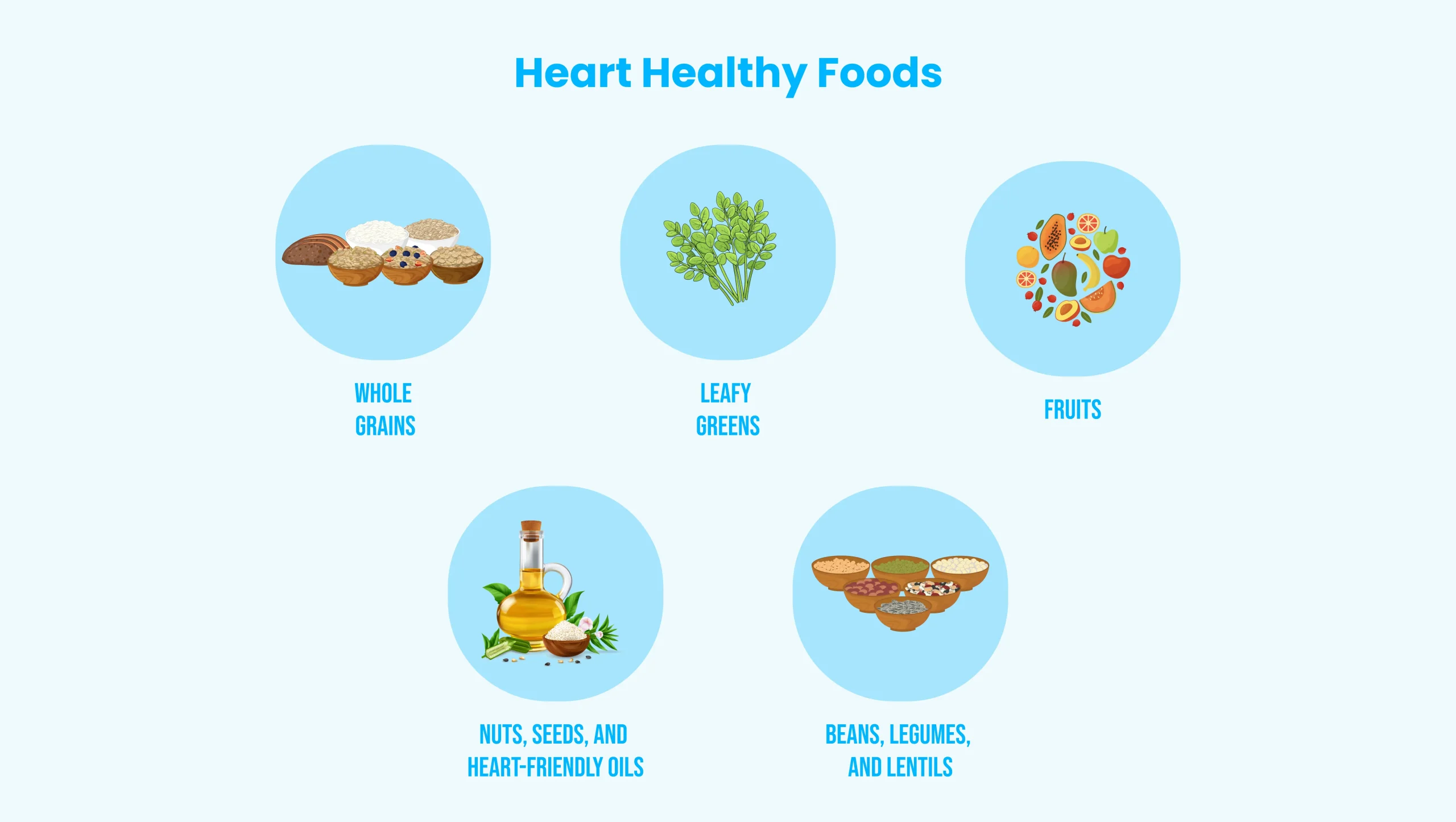
Dals are rich in fiber, plant protein, and minerals that help lower bad cholesterol and control blood sugar.
Best choices:
Heart tip: Cook with less oil and temper using mustard seeds + a little olive or mustard oil.
Traditional Indian grains are excellent for heart health when eaten whole.
Best options:
Why they help: High fiber improves cholesterol and keeps blood pressure stable.
Vegetable-based curries are heart-friendly when they’re not overloaded with oil or cream.
Top heart-healthy sabzis:
Cooking tip: Use sautéing, steaming, or pressure cooking instead of deep frying.
Fermented Indian foods improve gut health, which indirectly supports heart health.
Good choices:
Many Indian spices have natural anti-inflammatory and cholesterol-lowering properties.
| Spice | Heart Benefit |
| Turmeric | Reduces inflammation |
| Garlic | Lowers blood pressure |
| Ginger | Improves circulation |
| Cinnamon | Helps cholesterol control |
| Fenugreek (methi) | Supports blood sugar |
Not all fats are bad; it’s about type and quantity.
Better fat choices:
South Indian vegetable dishes are very heart-friendly when coconut is used in moderation.
Best options:
Leafy greens are rich in fiber, potassium, and antioxidants that help lower blood pressure and reduce artery inflammation.
Why they’re good for the heart:
Best ways to eat: Lightly sautéed sabzi, added to dal, or in paratha (less oil).
Fruits provide natural antioxidants, vitamins, and soluble fiber that protect the heart.
Heart benefits:
Top picks:
South Indian Meal Plan |
North Indian Meal Plan |
|
|
This sample Indian diet plan is heart-friendly, locally sourced, and based on widely accepted nutritional principles. It’s not a replacement for individual medical advice but a practical guide to start making healthy choices.
Foods to Limit for Heart Health
Stick to fresh, home-cooked meals whenever possible. For personalized guidance, consult the best cardiac hospital in Chennai.
This is a general dietary guide meant for informational purposes only. For customised nutrition advice, especially if you are diabetic, hypertensive, or managing heart conditions, please consult the expert dietitians and cardiologists at Dr. Mehta’s Hospitals.
Also, stay informed. Understand the causes, symptoms, and types of cardiogenic shock, so you can recognize and act early in emergencies.
Food is a powerful medicine. Small, consistent changes in your diet and lifestyle can strengthen your heart and improve your overall health. Choose locally grown, colorful produce, reduce unhealthy fats, and cook at home when possible.
At Dr. Mehta’s Hospitals, our expert cardiologists and clinical dietitians are here to support your journey to better heart health, through prevention, treatment, and long-term care.
Q1: Can I eat rice if I have heart issues?
Yes, but in moderation. Choose brown rice, red rice, or millets instead of white rice for added fiber and nutrients.
Q2: What cooking oil is best for the heart?
Mustard oil, groundnut oil, or blended oils low in saturated fat are heart-friendly options.
Q3: Are eggs good or bad for the heart?
Egg whites are high in protein and safe. Limit egg yolks if you have high cholesterol.
Q4: How often should heart patients eat fruits?
Include fruits daily. However, avoid high-sugar fruits like mangoes if your doctor advises so.
Q5: Do I need supplements for heart health?
Not unless prescribed. A balanced diet typically provides all essential nutrients.