
Painkillers are usually prescribed to treat headaches, body pains, fever, or joint pain. They are taken by many individuals without fully considering their effects on the body. Painkillers are useful when used in a responsible manner and with medical advice and guidance.
Nonetheless, some drugs can influence the health of the kidneys when used regularly or on a prolonged basis. Understanding how painkillers work and when to be cautious with them can help protect your kidneys and overall wellbeing.
In this blog, we will explain what painkillers can do, how they may affect kidney function, and what warning signs to look out for.
“Analgesics”, or “painkillers,” are medications that help relieve pain. They are common in the treatment of headaches, muscle strains, arthritis, dental pains or fever.
Paracetamol is the most widely used pain-relief medicine in India, with around 63–78% of people choosing it to manage pain. Self-medication is also very common, especially among students, where nearly 90% report taking it without medical advice. Combinations of NSAIDs are also widely used, particularly among individuals between 20 and 40 years of age.
Popular painkillers are:
These medicines work by reducing inflammation or blocking pain signals. Most individuals can tolerate them when they are used in the recommended doses and over the short term.
When taken frequently without medical guidance or in doses higher than recommended, painkillers may cause problems.
Long-term or high doses of some painkillers may influence the functioning of the kidneys. The most widely known medicines related to kidney issues are a group of medicines known as NSAIDs (non-steroidal anti-inflammatory drugs).
Studies have shown that long-term use of NSAIDs for pain management may increase the risk of chronic kidney disease (CKD). The findings also revealed that men had higher chances of developing CKD than women. Moreover, approximately 80 percent of reported ICSRs were categorized as severe and nearly 54 percent of the cases involved hospitalization.
Examples include:
These medicines help reduce pain and inflammation, but they can also affect the natural chemicals that maintain healthy blood flow to the kidneys.
When blood flow to the kidneys is reduced for a long time, their ability to filter waste may gradually decline. Occasional use under medical supervision is generally safe for most healthy adults. If you have concerns about kidney health or long-term medication use, consulting specialists at a top kidney hospital in Chennai, such as Mehta Hospitals, can help you receive the right evaluation and care.
Kidneys require steady blood flow to remove waste and balance fluids. Some painkillers can disrupt this process.
The following are some ways painkillers can affect kidney health:
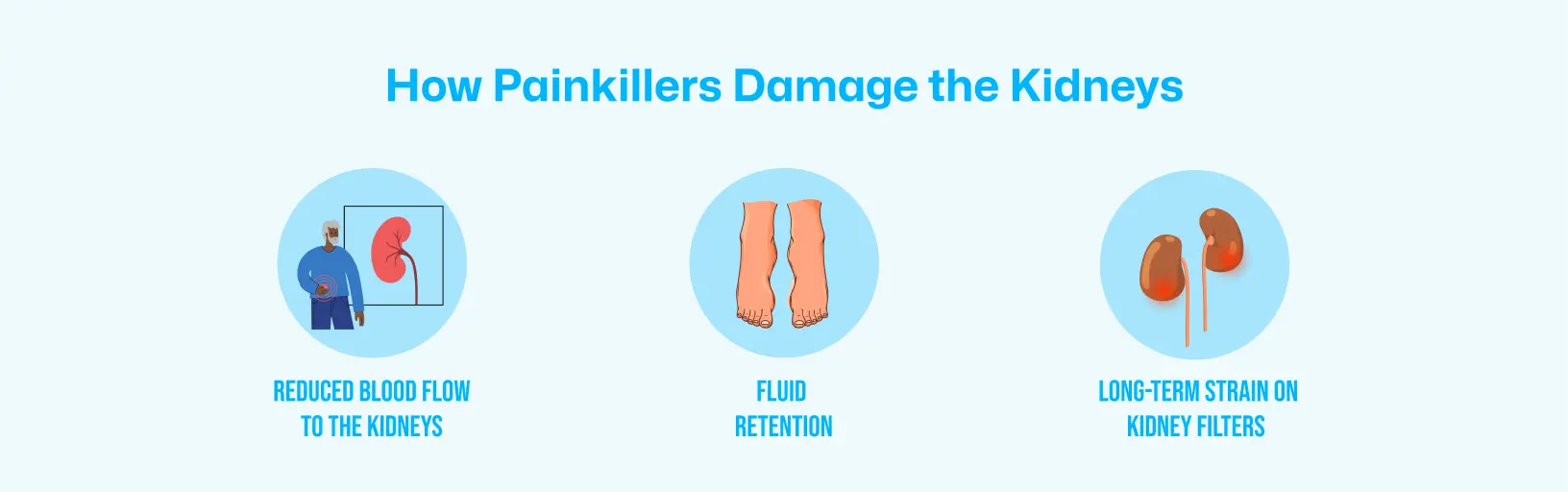
NSAIDs inhibit chemicals known as prostaglandins. These chemicals aid in the circulation of blood to the kidneys. A reduction in prostaglandins can lead to decreased blood flow to the kidneys.
Certain painkillers can make the body retain fluid, thereby putting strain on the kidneys.
With time, the repeated use of some drugs can have an impact on the small filtering units within the kidneys.
Painkillers consumed with some blood pressure drugs or diuretics can put additional pressure on the kidneys.
These effects usually develop gradually and are more likely when medicines are taken regularly without medical advice. If you experience sudden symptoms or complications related to medication use, seeking timely support from a 24/7 emergency care hospital in Chennai can ensure quick medical attention and the right treatment.
Kidney damage often develops slowly and may not cause noticeable symptoms in the early stages. Nevertheless, there are certain symptoms that can suggest that the kidneys require medical care.
Many health conditions can cause these symptoms, so a medical examination is needed to identify the exact cause. If medications are prescribed as part of the treatment, you can conveniently order them through a trusted online pharmacy, ensuring the timely and secure delivery of your prescribed medicines to your home.
Some people may be more vulnerable to kidney damage from regular painkiller use.
These include:
People with a history of kidney problems should not take painkillers without medical advice.
Kidney function can vary with age, and it is important to monitor medication.
The kidneys are already under stress, and further medication effects should be observed.
Some interactions between drugs can influence kidney filtration.
Daily or long-term use of painkillers may increase the risk of kidney strain.
When you fall into any of these categories, it is advisable to seek medical advice before taking pain medication on a regular basis.
Even painkillers can be used safely when taken in moderation.
Helpful tips include:
These basic precautions aid in pain treatment as well as kidney well-being. If your doctor prescribes medications, you can also obtain them conveniently through a reliable online pharmacy in Chennai, which offers secure prescription refills and home delivery for better patient convenience.
Pain medications play an important role in relieving pain and improving quality of life. They are usually safe for most individuals when they are used sparingly and with sound advice. Nevertheless, chronic or prolonged usage can put a burden on the kidneys.
Being aware of how medicines affect the body can help you make safer and more informed decisions. In the case of frequent use of painkillers or the presence of underlying health issues, it can be discussed with your physician to make sure that the treatment is safe and effective.
At Dr Mehta’s Hospitals, our specialists are committed to guiding patients toward safe and responsible pain management while protecting long-term kidney health.
Protecting kidney health often comes down to balance, awareness, and timely medical advice.Contact our expert doctors right now to start your kidney treatment.
Occasional use in recommended doses is generally safe for most healthy individuals.
2. Which painkillers are considered safer for the kidneys?
Doctors may recommend certain pain relievers depending on your health history. It is always best to follow medical advice.
3. How long is it safe to take painkillers?
Short-term use is usually safe for most people. Long-term use should always be monitored by a doctor.
4. Can drinking water help protect the kidneys while taking painkillers?
Staying hydrated can support kidney function, but it does not replace safe use of medication.
5. Should people with kidney disease avoid certain painkillers?
People with kidney conditions should consult their doctor before taking any pain medication, especially NSAIDs.
6. Can kidney damage caused by painkillers be prevented?
Yes. Using medicines responsibly and following medical advice can greatly reduce the risk.
7. Can protein powder damage the kidneys?
For most healthy people, moderate use of protein powder is unlikely to harm the kidneys. However, people with existing kidney disease may need to limit protein intake, as excess protein can put additional strain on the kidneys.
8. Is creatine harmful to the kidneys?
Creatine is generally considered safe when taken in recommended amounts by healthy individuals. However, people with kidney problems or those taking multiple supplements should consult a doctor before using creatine regularly.
9. Can too many supplements affect kidney health?
Yes. Taking large amounts of supplements, especially without medical advice, may place extra stress on the kidneys. It is important to use supplements responsibly and follow the recommended dosage.
10. Should people with kidney disease avoid gym supplements?
People with kidney disease should speak to their doctor before using protein powders, creatine, or other fitness supplements, as some products may worsen kidney function.