

Many people notice their knees popping or cracking while walking, climbing stairs, or getting up after sitting for a long time. Even without pain, swelling, or discomfort, the sound can feel concerning. Is it normal? Should you worry? Or does it need medical treatment?
The good news is that painless knee popping is quite normal and not always harmful. Understanding why it happens can ease anxiety and help you know when to consult a doctor.
Knee cracking refers to popping, clicking, or snapping sounds when the knee joint moves. This sound can occur during bending, straightening or walking.
In India, this issue is strongly linked to the rising number of people with knee osteoarthritis. Studies suggest that knee-related problems affect more than 150 million people across the country.
Knee cracking in most instances is a normal aspect of joint movement and should not be interpreted to mean a problem. A knee joint is a complex structure comprising bone, cartilage, ligaments, tendons and fluid. Sometimes, minor changes within these structures can create sounds.
Knee cracking that occurs without pain and swelling is normally connected to normal joint movement as opposed to injury. Some of the common causes are listed below.
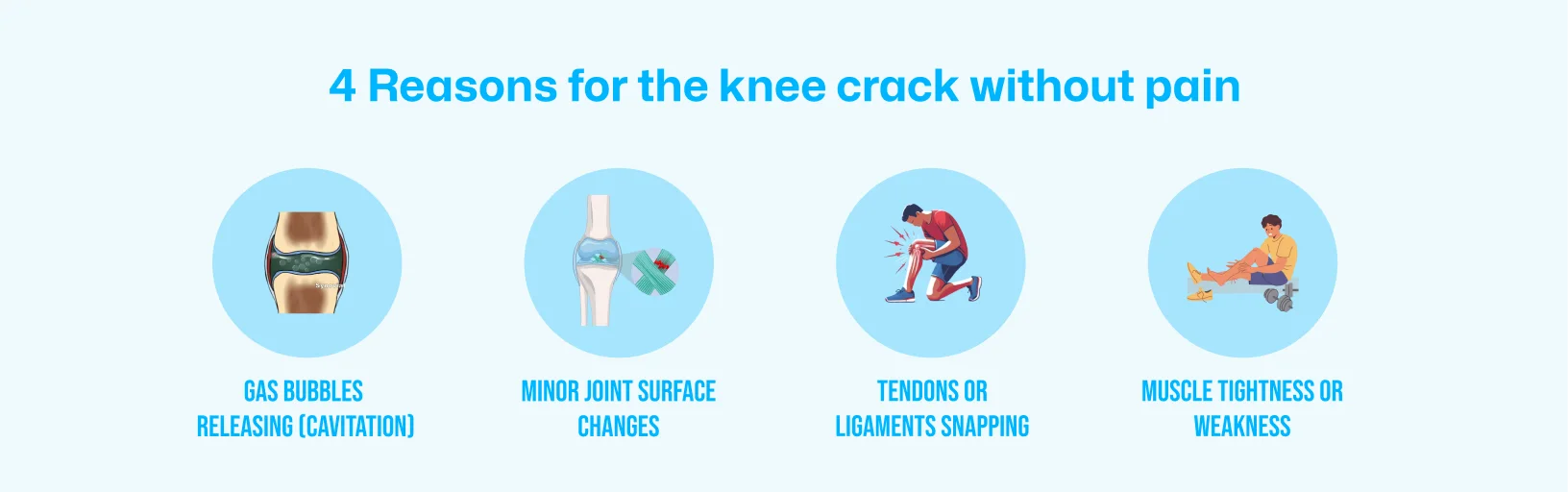
Each joint contains fluid that reduces friction. This fluid contains dissolved gases such as oxygen and nitrogen.
When you move your knee, changes in joint pressure can cause small gas bubbles to form or release. This is referred to as cavitation and may make a popping or cracking noise.
This type of knee cracking:
This is one of the most common and harmless causes of knee cracking. If the sound happens often or begins to cause pain or discomfort, it is best to consult a specialist at a trusted orthopedic care in Chennai to get your knees properly checked and cared for.
Ligaments and tendons help stabilize the knee and support movement. Sometimes, as you bend or straighten your knee, these soft tissues may slide over bone surfaces and snap back into place.In some cases, ligament injuries such as ACL tears may also cause similar sounds. One research study found that about 69 out of every 100,000 people experience an ACL tear. This can cause:
This is usually observed when walking, standing up, or when sitting at length. This tends to be alleviated with regular exercise and minor stretching.
With aging, there is minor unevenness in cartilage that cushions the knee joint due to natural wear and tear. These minor changes can produce sound when the glide of joint surfaces.
If there is:
Knee cracking in such cases is usually not a cause for concern. However, if it is accompanied by pain, swelling, or stiffness, getting timely tests done at a trusted diagnostic facility, such as a leading diagnostic lab in Chennai, can help identify any underlying issues early.
Tightness of the thigh or calf muscles, or lack of strength around the knee, may influence the smoothness of movement of the joint. This can make everyday movements noisier.
Knee cracking may be reduced by increasing muscle flexibility and strength.
Knee popping is usually regarded as normal when:
Knee cracking is common among healthy adults, especially after long periods of rest or increased physical activity.
In these situations, sound in itself is not dangerous and does not imply that it needs to be treated. However, if knee noises are accompanied by sudden pain, injury, or loss of movement, accessing 24/7 emergency care in Chennai ensures timely evaluation and immediate support when it matters most.
Although there is no harm in cracking the knee and feeling no pain, there are some indicators that cannot be overlooked.
| Warning Sign | What It May Indicate |
| Pain or swelling | Meniscus-related concerns, joint wear, or cartilage changes |
| Stiffness with movement | Reduced joint flexibility or muscle tightness |
| Feeling of instability | Ligament support issues |
| Cracking after an injury | Changes that need medical evaluation |
| Difficulty walking or climbing stairs | Joint strain or movement imbalance |
These signs may indicate joint irritation, cartilage changes, or ligament concerns. Getting an early evaluation not only offers reassurance but also helps doctors determine if advanced options, including different types of orthopedic surgery, are needed for effective treatment planning.
Even simple daily routines can be used to keep knees comfortable and minimize unwarranted joint noise.
Regular low-impact exercises such as walking, cycling, or swimming help keep the knees flexible and strong.
Strong thigh and hip muscles support the knee and improve joint stability. Light exercises under the supervision of a physiotherapist can assist.
Stretching improves flexibility and reduces snapping caused by tight tissues.
Being overweight causes strain on the knees. A healthy weight is beneficial for long-term joint comfort.
Warming up before exercise prepares the muscles and joints and reduces sudden strain on the knees.
Proper footwear stabilizes proper posture and causes less pressure on knee joints when walking. In case of knee joint cracking persistence or worry, a physician may advise you personally.
When knees crack during a walk, it can be alarming, but painless knee cracking can be common and harmless. In most cases, it is linked to natural joint movement, gas release, or soft tissues adjusting during motion.
Being active, keeping the muscles strong and listening to your body are easy measures that will help to keep your knees healthy. If cracking is accompanied by pain, swelling, or difficulty moving, medical advice can help identify the cause and provide reassurance.
Healthy knees lead to an active and comfortable life, and healthy habits in everyday life can make a difference. Contact our top specialists to book your appointment now.
In most cases, no. If there is no pain or swelling, knee cracking is usually harmless and part of normal joint movement.
Yes. Strengthening and stretching exercises often improve joint movement and may reduce knee cracking.
Not necessarily. Knee cracking alone does not indicate arthritis. Other symptoms, such as persistent pain or stiffness, should be evaluated.
No. Walking is safe unless it causes discomfort, pain, or instability.
You should consult a doctor if cracking is accompanied by pain, swelling, stiffness, or difficulty moving.
Yes. Sitting for long periods can make joints stiff, which may cause cracking when you begin moving again.