Kidney stones are not as rare as some individuals may think, and their initial symptoms are often unnoticeable. In other instances, these symptoms can be overlooked or confused with normal pain. Knowledge of the early symptoms of kidney stones can help individuals seek timely care, ease discomfort, and prevent further complications.
Kidney stones can develop in both men and women, but the manifestation can be slightly different. Understanding these differences can support earlier diagnosis and more informed healthcare decisions.
Kidney stones are observed in adults aged between 20 and 40 years in India. Studies suggest that nearly 12 percent of people may develop urinary stones at some point, making this a fairly common condition. So, what are the early signs of kidney stones? Early detection of kidney stone signs makes it possible to provide guidance and supportive treatment. Early attention can help:
The initial assessment also assists physicians in determining whether monitoring or treatment is necessary.
The table below outlines how early kidney stone symptoms may present in men and women. While many symptoms are similar, the way they are felt or described can vary.
Early Signs of Kidney Stones in Men vs Women
| Symptom | Men | Women | Same or Different? |
| Lower back or side discomfort | Very common, often sharp | Common, may feel dull at first | Same |
| Pain during urination | Common | Common, can feel like a urinary infection | Same |
| Blood in urine | Common | Common | Same |
| Frequent urge to urinate | Less common early | More noticeable early | Slightly different |
| Discomfort spreading to groin or lower abdomen | Common | Less common | Different |
| Nausea or stomach unease | Common during episodes | Common | Same |
| Cloudy or strong-smelling urine | Sometimes noticed | Often noticed earlier | Slightly different |
| Interrupted urine flow | More noticeable | Rare | Different |
| Restlessness or difficulty staying still | Common | Common | Same |
These differences do not mean kidney stones affect one gender more seriously than the other. They simply reflect how symptoms may be experienced. This is why guidance from a dedicated nephrology team in Chennai can be helpful in understanding and recognising symptoms early and planning the right next steps for kidney care.
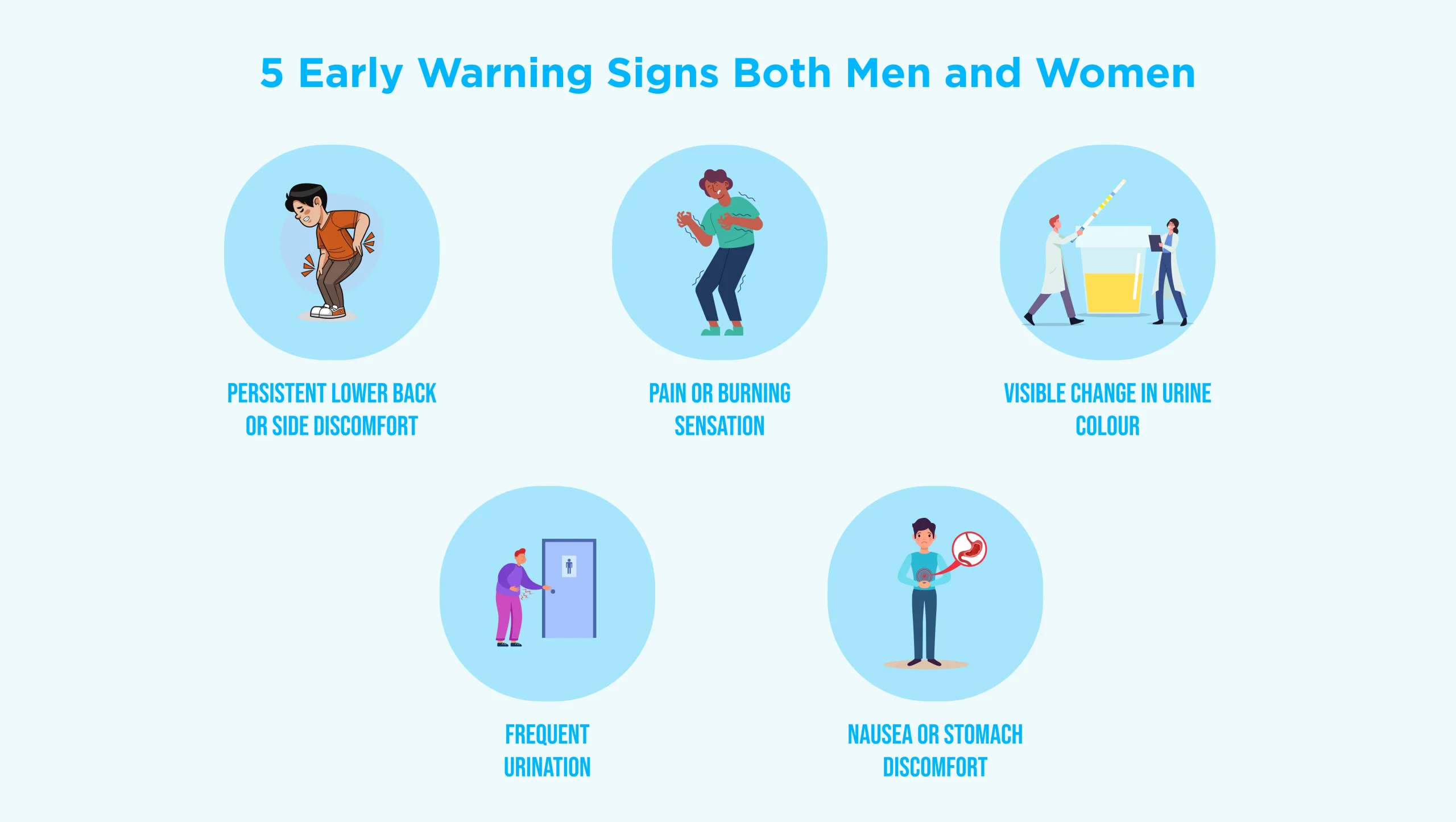
While symptoms may vary, some early warning signs of kidney stones deserve attention in everyone:
Lower back or one-sided abdominal pain that is intermittent can be the first sign of kidney stones. At the beginning, it can be mild, and in some cases can be confused with muscle strain or exhaustion. When the discomfort recurs frequently or gradually intensifies over time, it could be important to pay attention to it since kidney-related discomfort tends to have a subtle onset before becoming apparent.
Pain or discomfort in the urine stream is normally associated with urinary infection, but it can also indicate the onset of kidney stones. The feeling can be experienced when a stone is scratching the urinary tract. When the discomfort recurs or does not resolve with standard treatment, medical advice can be used to determine whether the issue is a stone or another urinary complication.
The shift of the urine colour to pink, reddish or brownish can even mean that there is the presence of blood. This can be a result of a kidney stone irritating the lining of the urinary tract. Although the colour change may appear temporary or mild at first, it cannot be neglected. A urine test can be easily done to explain the cause and give reassurance. If symptoms worsen or are accompanied by severe pain, having access to immediate care and 24/7 support can help ensure prompt evaluation and peace of mind.
A strong urge to urinate often and the urine being limited in volume are the first indicators of irritation of the urinary system. This sensation can also be caused by kidney stones that move or influence the flow of urine. In case this need persists, and there is no obvious cause like fluid consumption, it could be a good idea to consult the doctor.
Kidney stones may be accompanied by unexplainable nausea or a vague feeling in the stomach. This is due to the fact that the kidneys and the digestive system have common nerve pathways. When the kidneys are irritated, this can be manifested through stomach pain. When nausea occurs alongside urine changes or back pain, it is advisable to seek medical evaluation instead of treating it as a digestive problem. A timely lab test in Chennai can help pinpoint the exact cause and guide the right treatment plan with clarity and confidence.
Kidney stones are typically diagnosed by a combination of imaging and simple tests. Urine and blood tests could be the first step taken by doctors who need to check for infection, mineral levels, and kidney activity.
Imaging studies like a CT scan or an ultrasound are used to determine the size and location of the stone. These results help doctors decide whether monitoring, medical management, or further treatment is required. These assessments make many people feel secure knowing what is going on in the body.
Kidney stones are vulnerable to recurrence. Estimates suggest that nearly one in two individuals may develop another stone within 5 to 10 years of the first episode. According to some of the long-term research, this risk may grow even more in 25 years.
Kidney-wide nephrology assessment, based on established guidelines, is usually an advantage to those who are already tracking the well-being of their kidneys or urinary symptoms. Recognizing early symptoms of kidney problems and consulting specialists promptly can make a meaningful difference in preserving long-term kidney health.
The initial symptoms of kidney stones can be rather insignificant. Although men and women can have slightly different symptoms, early awareness will allow everyone to react positively and without panic. Listening to the early signs of kidney stones in men, continuous hydration, and consulting a doctor when the symptoms are not normal can positively affect long-term kidney comfort.
Through early diagnosis and appropriate treatment, most individuals are able to treat kidney stones to manage them and resume their normal lives with ease. Reach out to a healthcare professional to begin the appropriate evaluation and care.
Early signs of kidney stones may include lower back discomfort, changes in urine colour, pain during urination, and frequent urges to pass urine.
The core symptoms are similar, but women may notice urinary changes earlier, while men may feel sharper discomfort around the groin or lower abdomen.
Yes, urine tests and imaging can help detect kidney stones early, even before symptoms become severe.
If symptoms repeat, last longer than expected, or feel unclear, medical advice can help rule out concerns.
In many cases, early detection allows monitoring and supportive care, which may prevent stones from growing larger.