Kidneys play a crucial role in maintaining overall health by eliminating waste, balancing fluids, and supporting key body functions. When the kidney is compromised, the body may struggle to control some of the minerals, salt, fluids, and toxins. Healthy food options are necessary in these instances. Kidney-friendly diet assists in preserving the work of the kidneys, treating symptoms, and promoting long-term health. Living well with kidney disease can be achieved with straightforward guidance and awareness.
A kidney-friendly diet is designed to reduce the workload on the kidneys.. It mainly focuses on:
It varies for each individual, depending on the type and severity of kidney disease. A renal dietitian or a doctor can assist in developing a plan, depending on the report of the tests and personal requirements.
For personalised guidance, you can consult the experts at Dr. Mehta’s Hospitals for a tailored and supportive care plan.

Chronic kidney disease (CKD) is quite common in India, with recent research suggesting that around 16 out of every 100 people may be affected.
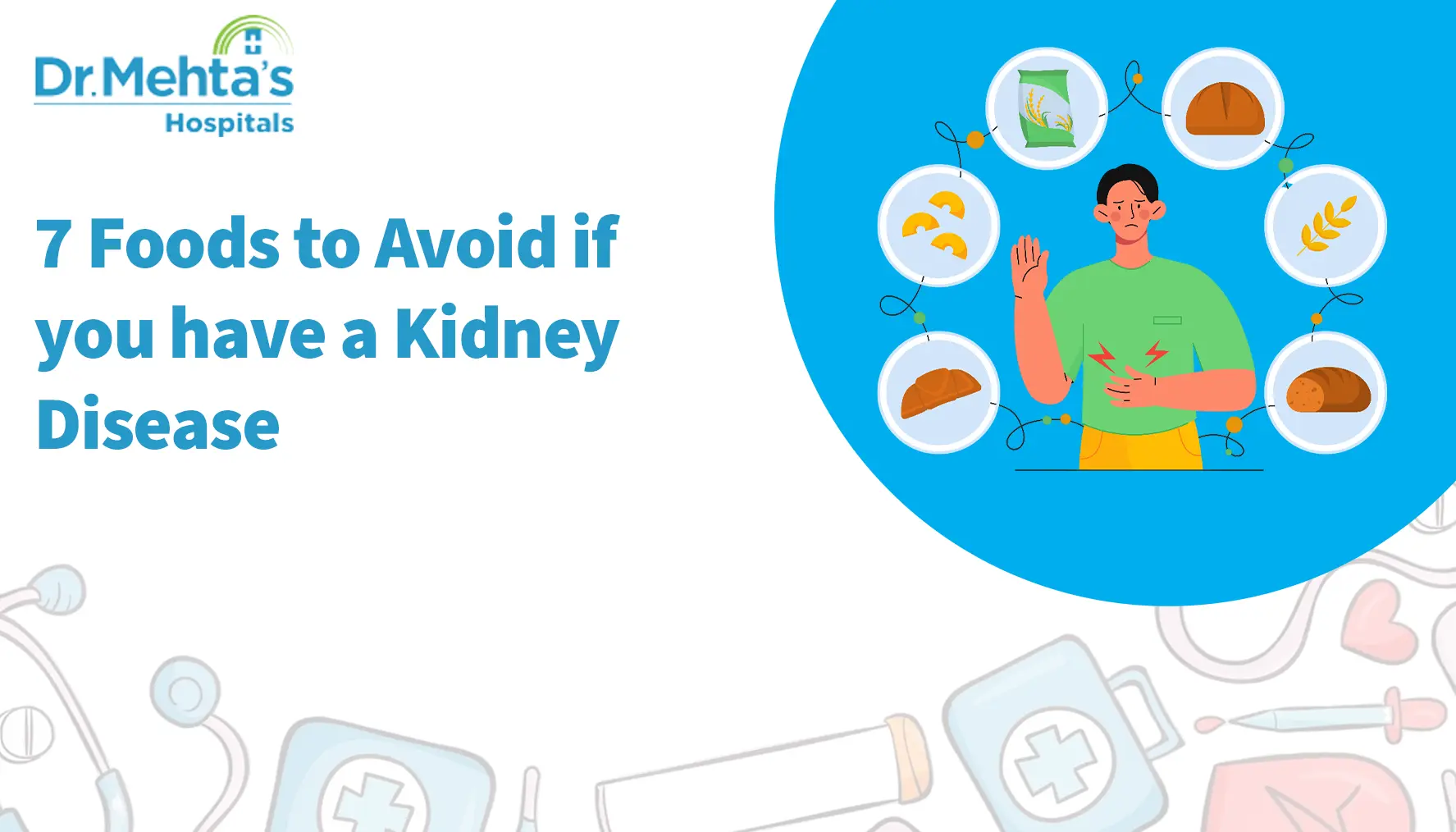
It’s important to understand why certain foods affect kidney function before restricting them. The following foods are usually recommended to be restricted or avoided based on the stage of kidney functionality. Your healthcare provider should always be consulted before any significant change in your diet.
Salt directly influences the body’s fluid balance. The excess sodium may lead to water retention, swelling, and high blood pressure in case the kidneys are not functioning well.
Foods to avoid with kidney disease or reduce include:
You can still add flavour by using less salt and incorporating herbs, lemon, jeera, garlic, or fresh spices.
In 2022–23, close to 97 percent of households in India were consuming packaged/processed food, a massive rise over approximately 82 percent in 201112. Many of the processed foods contain added salt, preservatives or phosphates, which can further overload the kidneys. Artificial flavours or colours can also be included in these.
Examples include:
Home-cooked meals give you better control over ingredients.
Potassium is involved in the functioning of the heart and muscles. However, where the kidney is performing poorly, potassium can build up in the blood. This can lead to symptoms like fatigue or muscle cramps
High potassium foods to avoid with kidney disease:
Soaking or boiling vegetables can help reduce their potassium content..
Phosphorus aids in maintaining good bones and energy. But it is only when the kidney fails to balance phosphorus that too much phosphorus may affect the body in terms of bone strength. Many packaged foods also contain phosphate additives.
Foods to avoid with kidney disease and diabetes:
For a large number of people, it is more successful to choose fresh and natural alternatives. For personalized recommendations, consulting a leading and the best kidney transplant centre in Chennai can be helpful.
Protein is required, but too much may overload the kidneys because they produce wastes that must be filtered. Instead of high protein intake, aim for balanced portions as advised by your doctor or dietitian.
Examples to reduce:
Depending on the individual’s needs, vegetarian sources of protein can be prescribed in moderation. To understand what to eat based on your condition, a nephrologist in Chetpet can help customise your diet based on your kidney health needs.
Indian cuisine includes a wide variety of fermented and preserved foods. They are generally high in salt but are also tasty.
Examples include:
Fresh herbs or homemade chutneys that are low in salt would be a better substitute.
The sugar regulation is also important, especially when kidney disease is coupled with diabetes. Kidney care is complicated by the fact that sugar-rich food may affect the condition of energy and weight management.
Minimum or avoid foods include:
Hydration is important, but the type and amount of fluids should be guided by your doctor. When you are not sure what is appropriate for your condition, you can visit a kidney specialist in Velappanchavadi to obtain advice based on your health condition.
People with kidney disease need to be mindful of their diet, monitor their health regularly, and make gradual lifestyle changes. Dietary avoidance of some foods can help to decrease the burden on the kidneys and ensure a stable energy level and comfort. Small everyday choices can make a meaningful difference. In case you are confused about what to eat or experience such symptoms as swelling, fatigue, or urinary changes, it might be beneficial to see a specialist at an early stage.
At Dr. Mehta’s Hospitals in Chennai, renal specialists can guide you with a personalised approach to long-term kidney wellness. Contact us right now to start getting treatment.